ELEGOO 3PCS 0.96 Inch OLED Display Screen Module Compact Self-Luminous SSD1306 I2C Display Mini Screens for Arduino Projects
Quick take
This 3-pack of compact 0.96-inch OLED modules is built around the SSD1306 controller and communicates over I2C, making it a convenient choice for maker projects on Arduino, Raspberry Pi, and similar boards. Buyers generally report that they wire up and display cleanly, with strong support from common SSD1306 libraries. The biggest caveats are the small screen size (text can feel tiny) and fixed blue/yellow LED color behavior, plus mounting hardware compatibility may take a little extra work.
Pros and cons
Pros
- Sharp 128x64 OLED resolution in a very small form factor (0.96-inch diagonal).
- Self-luminous pixels for good contrast and visibility, with a wide stated viewing angle.
- I2C interface is straightforward, and it works across 3.3V to 5V projects.
- Popular SSD1306 display libraries (including lower-RAM options) can be used for graphics and text.
- Comes in a multi-pack and includes Dupont wires to speed up wiring.
Cons
- Screen is small, so characters and UI elements may be difficult for users who want larger text.
- Color behavior is fixed, so you cannot “theme” the display font color beyond the module’s native scheme.
- Mounting hole spacing may not match common standoffs or standard hardware, which can complicate enclosure builds.
What buyers think
Buyer feedback is generally consistent on a few practical points: the displays are compact, easy to wire with I2C (fewer connections than parallel displays), and they tend to “just work” with familiar SSD1306 software setups. Multiple buyers highlight that the output looks crisp for the small panel, and that basic graphics and character rendering are achievable through widely used libraries. Evidence is more limited on long-term reliability, but the overall theme is that these modules deliver the expected OLED behavior for typical prototyping use.
Key specs that matter for choosing
Display and controller
- Display type: OLED (organic light-emitting diode)
- Resolution: 128x64 pixels
- Driver IC: SSD1306
- Color behavior: Blue and yellow OLED output (font and pixel colors are not user-configurable)
Interface and power
- Communication: I2C
- Operating voltage: 3.3V to 5V
- I2C address: commonly referenced as 0x3C for the 7-bit address (0x78 appears as the 8-bit form including the write bit)
- Power draw (normally): stated at 0.06W
Physical size and usability
- Diagonal size: 0.91 inches (0.96-inch class)
- Viewing angle: specified as greater than 160 degrees
- Working temperature: -20°C to 60°C
Pros and cons in plain terms
Why this OLED module is a good fit
If you need a small, self-luminous screen for a microcontroller project, this SSD1306 I2C module is built for that exact use. The I2C connection makes wiring simpler (power plus I2C lines), and the resolution is high enough for simple UI elements, icons, and basic graphs. Because it is SSD1306-based, it generally aligns with common Arduino and Raspberry Pi display approaches, including both “full” graphics libraries and lighter-weight text/ASCII options when memory is tight.
Where buyers may run into friction
The most common “fit” issues are not about the electronics, they’re about the enclosure and the user experience. The panel is small, so text can be cramped depending on your font choice. Also, the module’s blue/yellow scheme is fixed, so if your design depends on changing font color dynamically, you will need a different display type. Finally, mounting hole sizes may not match typical PCB standoff hardware, so plan for custom standoffs, different connector geometry, or a printed mounting solution.
Library and wiring considerations (so setup goes smoother)
Because this is an SSD1306 I2C display, it typically integrates with well-known display libraries in the Arduino ecosystem. If your microcontroller has limited RAM, using a lighter-weight approach (for example, text-focused or ASCII-style rendering) can help avoid memory pressure. On the hardware side, I2C normally requires fewer connections than other display interfaces, and the included Dupont wires are meant to reduce the friction of getting started.
Verdict: is it worth it?
The ELEGOO 3PCS 0.96-inch SSD1306 I2C OLED modules are a practical choice for makers who want compact, crisp, self-luminous screens and expect to work with I2C display libraries. They are especially attractive as a multi-pack when you are building more than one prototype. If you care about large readable text, color customization, or drop-in mechanical mounting with standard PCB standoffs, you may want to look for a larger OLED option or a display designed for your enclosure’s mounting pattern.
Alternatives to consider (by buyer priorities)
- If text size and readability are your priority: consider a larger OLED module (similar SSD1306 class or a different controller) so you can fit bigger UI elements.
- If you need configurable font or pixel colors: consider displays that support true color or a different pixel architecture, since this OLED’s blue/yellow behavior is fixed.
- If mechanical integration matters most: look for modules with mounting hole spacing that matches your enclosure or comes with an integrated frame to reduce fabrication work.
FAQ
What is the I2C address for this OLED module?
The common 7-bit I2C address for this SSD1306 OLED module is 0x3C (0x78 is the 8-bit form that includes the write operation bit).
Does it work with arduino and raspberry pi?
Yes, it is designed for maker boards and is compatible with systems that support SSD1306-style I2C display driving, including Arduino and Raspberry Pi setups.
How many wires do I need to connect it?
Because it uses I2C, you typically connect power (VCC and GND) plus the I2C data and clock lines.
Can I change the font color?
No, the display’s blue/yellow color behavior is fixed, so you cannot dynamically change font color like you could with full-color displays.
Is the screen big enough to read comfortably?
It is a 0.96-inch class display, so text is inherently small. If you need large, easy-to-read characters, you may find this size limiting.
Will the mounting holes fit standard standoffs?
Mounting hole spacing may not align with standard PCB hardware, so you might need standoff changes, right-angle connector choices, or enclosure modifications.
Specifications
| Product Title | ELEGOO 3PCS 0.96 Inch OLED Display Screen Module Compact Self-Luminous SSD1306 I2C Display Mini Screens for Arduino Projects |
|---|---|
| Category | Electronics > Computers & Accessories > Computer Components > Desktop Barebones |
| Manufacturer | ELEGOO |
| Item Weight | 1.06 ounces |
| Package Dimensions | 4.65 x 2.05 x 0.83 inches |
| Item model number | EL-SM-008 |
Recommended next
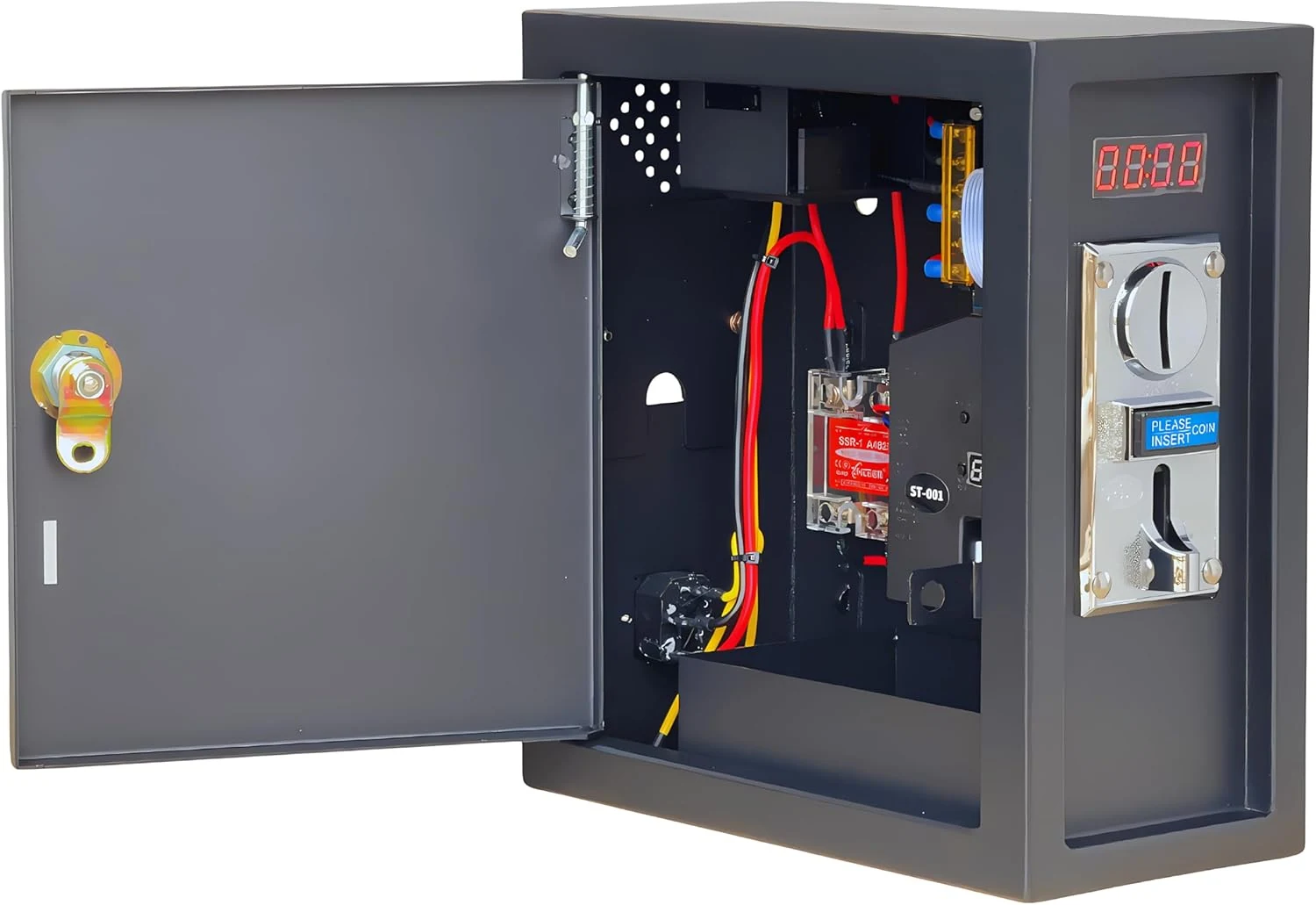
Sintron ST-002 Industrial Coin Operated Timer Control Power Box
The Sintron ST-002 is a coin-operated timer control power box designed for commercial, time-based equipment like washers, arcade machines, and massage chairs. It supports up to 110V/120V 16A and uses an 8-channel multi-coin acceptor with an LED countdown display, but buyers should plan for setup, programming, and potential reliability variability seen in limited reviews.
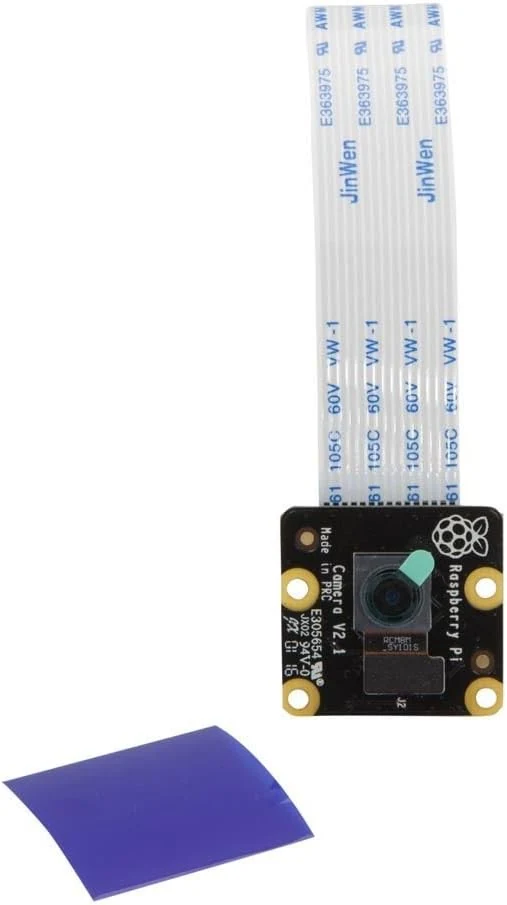
Raspberry Pi NoIR Camera Module V2 - 8MP 1080P30
The Raspberry Pi NoIR Camera Module V2 pairs an 8MP Sony IMX219 sensor with a fixed-focus lens for sharp infrared-ready imaging. It supports common Pi camera video modes (including 1080p30) and is widely used for low-light and night projects like monitoring, security-style setups, and webcam uses.
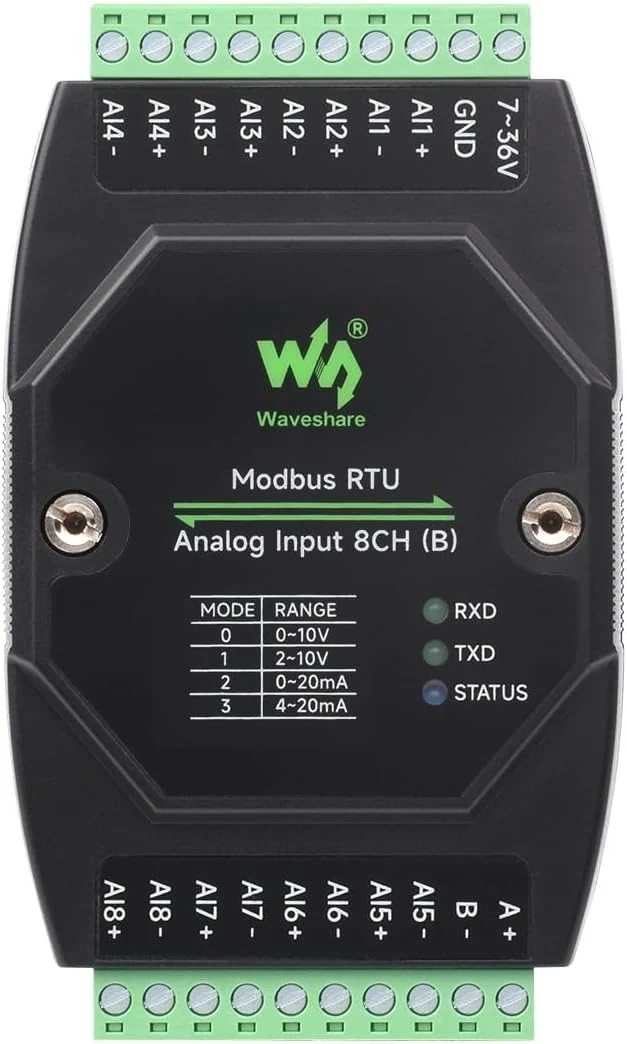
Waveshare Industrial 8-Ch Analog Acquisition Module, 12-Bit High-Precision, Supports Voltage review
An industrial-friendly 8-channel analog acquisition module for reading 0–10V signals over Modbus RTU (RS-485), with a wide DC 7–36V input and on-board isolation protection features. It is a strong budget option for monitoring analog sensors, but setup documentation and per-channel scaling can be a pain point depending on how exact your calibration needs to be.
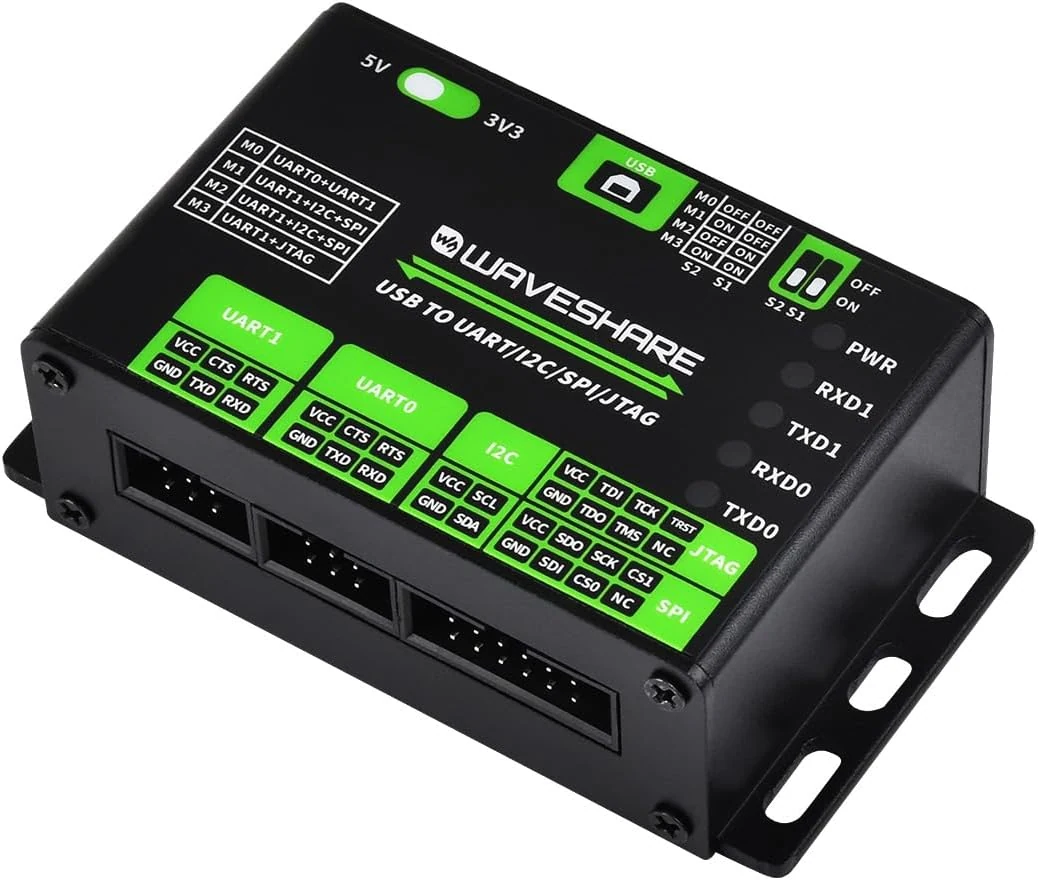
waveshare USB to UART/I2C/SPI/JTAG Converter, Supports Multiple Interfaces, Compatible with 3.3V and 5V, Multiple Systems Support, Support Linux (Only for Raspberry Pi)
The waveshare USB to UART/I2C/SPI/JTAG Converter is a compact debug adapter for firmware bring-up, EEPROM work, and hardware recovery tasks. It supports multi-protocol use cases (2-channel UART, or UART plus I2C plus SPI, or UART plus JTAG), includes 3.3V/5V level switching, and adds protection and status visibility. The main caveat is that Linux support is not “only Raspberry Pi” in practice, but JTAG reliability depends on your specific chip and tools, so plan to validate your setup.