UMLIFE 2Pack of BT-168 Battery Tester, Universal Battery Tester, Small
Quick take
The UMLIFE BT-168 is a small, analog battery tester for most common household batteries, including AA, AAA, C, D, 9V, and 1.5V button cells. It uses the battery you are testing to power the meter, and its needle moves across a color-coded scale to help you decide whether batteries are good, low, or ready to replace.
The main limitation is that it is not designed for higher-voltage lithium cells (and some coin-cell/lithium options fall outside its range), so it is best for “standard” 1.5V and 9V household batteries.
Pros and cons
Pros
- Tests multiple everyday battery sizes: AA, AAA, C, D, 1.5V, and 9V (plus 1.5V button cells).
- Easy-to-interpret analog scale with color zones for “good,” “low,” and “replace/recharge.”
- No extra batteries required for operation, since the tester is powered by the battery being checked.
- Compact, portable design (ABS), useful for keeping in a drawer or battery box.
Cons
- Limited to its listed battery types and volt ranges, so lithium cells outside the supported range may not test correctly.
- Analog needle readings can feel less precise than digital voltage testers for buyers who want exact numbers.
- Review evidence is generally positive, but there is limited detail on long-term durability beyond typical use.
What buyers think
Buyer-review evidence is largely consistent on a few practical points. People like that the testers are simple to use and cover many household battery sizes, making it easier to “weed out” weak or failing batteries before they cause problems in remotes, clocks, and other devices. Reviewers also frequently highlight the convenience of the compact form factor and the fact that the tester does not require its own battery to operate. For precision-minded shoppers, evidence suggests the tester is straightforward rather than highly detailed, and buyers who need coverage for additional lithium voltages may find it less suitable. A small amount of review evidence mentions occasional unit-level issues (such as a defective meter within a multipack), but the overall pattern remains that most testers work as intended.
How the BT-168 battery tester works
The BT-168 is an analog battery checker with a needle that moves across a calibrated, color-coded scale. As you test a battery, the meter indicates a status zone: green for “good,” yellow for low power, and red for replace/recharge. There is no separate power source because the tester is activated by the battery you are checking.
Supported battery types and voltage ranges
It is designed for common household batteries, including AA, AAA, C, D, 9V, and 1.5V button cells (and it references 1.5V levels broadly). The tester’s guidance is split across voltage bands, with different outcomes for “good,” “low,” and “replace” conditions. That makes it a practical tool for routine battery maintenance, especially if you keep a mix of standard alkaline or similar household cells.
Buyer-fit note: if your household relies heavily on lithium coin cells and other higher-voltage or different chemistry options, you may need a tester that explicitly supports those ranges.
Pros and cons in real household use
Where it shines
- Battery sorting without guesswork: instead of relying on “it seems weak,” the color zones make quick decisions easier.
- Maintenance-friendly workflow: the no-extra-battery operation reduces friction, since you do not have to keep a separate tester battery charged.
- Multipack convenience: a 2-pack can work well for keeping one near your battery storage area and another in a workspace or drawer.
Where you may want a different tester
- You need digital readouts: if you want exact voltage numbers or a more detailed measurement experience, an LCD model may be a better fit than an analog needle scale.
- Your battery mix is mostly lithium: the tester is aimed at common household battery types, and support may not extend to higher-voltage lithium cells or specific coin-cell formats outside its stated range.
Who should buy this battery tester
Consider the UMLIFE BT-168 2-pack if you want an affordable, compact battery checker for a household battery drawer. It is well suited for people who regularly use AA/AAA/C/D and 9V batteries in everyday devices and want a fast way to separate usable batteries from ones that are heading toward failure.
Who should skip it
You may want a different model if your main batteries are lithium cells that fall outside the tester’s supported volt ranges, or if you need precise, numeric voltage readings rather than a color-coded status system.
Price and availability
This is positioned as a low-cost option in the battery tester category, and reviewers mention it as good value for getting more than one tester. Availability can vary by retailer, so check the latest listing before purchasing.
FAQ
- Can this tester check AA, AAA, C, and D batteries? Yes, it is made for common household sizes including AA, AAA, C, and D.
- Does it require its own battery? No. It is powered by the battery being tested.
- How does it show results? It uses an analog needle on a color-coded scale indicating “good,” “low,” and “replace/recharge.”
- Will it test lithium coin cells like CR2032? It is intended for common household batteries including 1.5V button cells, but it may not cover lithium coin cells outside its supported range. If you use lithium coin cells regularly, confirm your specific chemistry and voltage needs first.
Final verdict
The UMLIFE BT-168 2-pack is a practical, budget-friendly way to manage everyday household batteries. If your collection is mostly AA, AAA, C, D, and 9V (plus 1.5V button cells), the color-coded analog scale and no-extra-battery design make it easy to keep devices running reliably. The biggest reason to choose something else is if you need coverage for lithium batteries outside its stated range or if you want a digital, number-based measurement experience.
FAQs
Specifications
| Product Title | UMLIFE 2Pack of BT-168 Battery Tester, Universal Battery Tester, Small Battery Tester for Household Battery, Suitable for AAA AA C D 9V 1.5V Button Battery |
|---|---|
| Category | Electronics > Household Batteries, Chargers & Accessories > Battery Testers |
| Brand | UMLIFE |
| Manufacturer | UMLIFE |
| Color | 2PCS |
| Power Source | Battery Powered |
| Minimum Operating Voltage | 1.28 Volts |
| Style Name | Portable & Light |
| Brand Name | UMLIFE |
| UPC | 687117741158 |
| Part Number | UM-2BT-168 |
| Included Components | Tester |
| Unit Count | 2.0 Count |
| Style | Portable & Light |
| Min. Operating Voltage | 1.28 Volts |
Available variants
Color
- 4PCS
- 2PCS
- 10PCS
- 3PCS
Recommended next
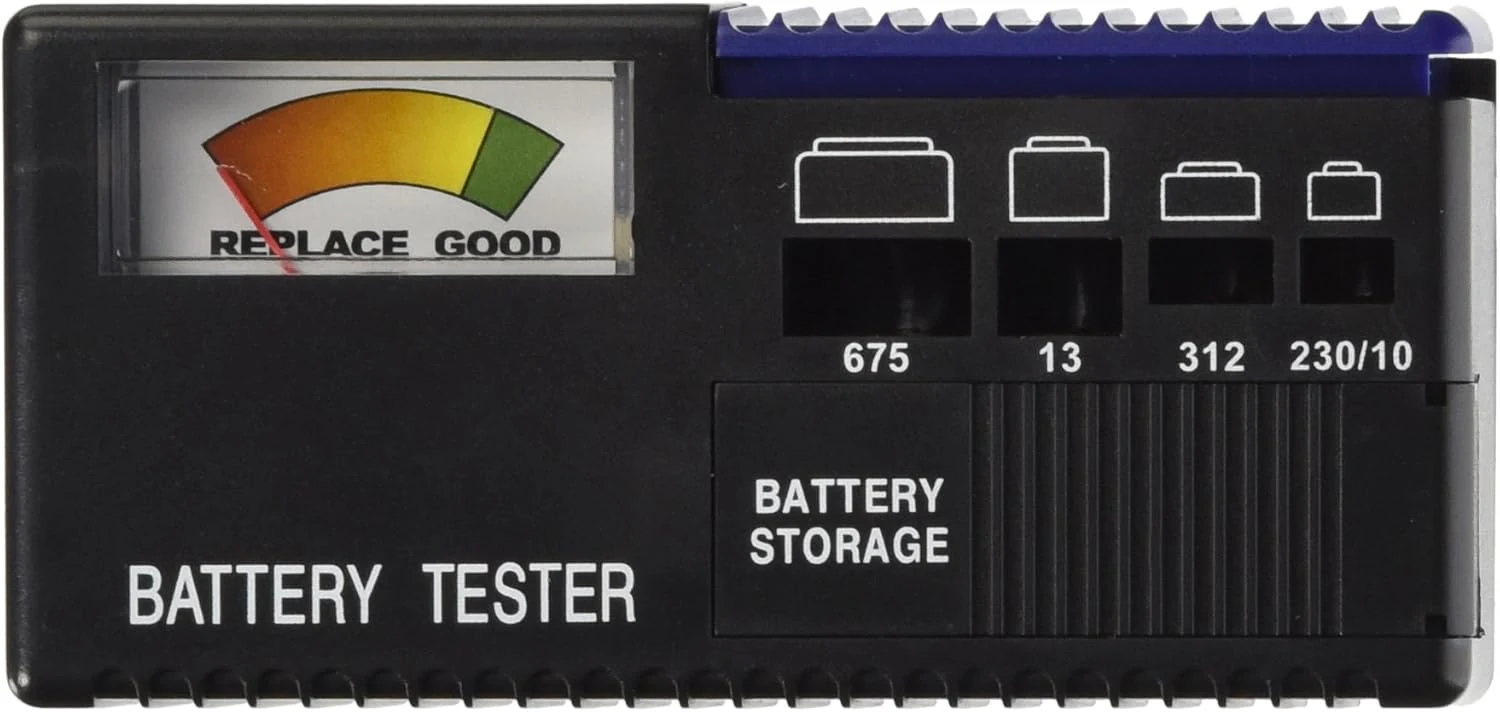
Activair Hearing Aid Battery Tester
The Activair Hearing Aid Battery Tester is a simple, consumer-style tool for checking zinc-air hearing aid batteries using an analog meter and dedicated slots for different battery sizes. It can help you quickly tell whether a battery is fully functional versus near-dead, though it cannot perfectly estimate remaining runtime for every hearing aid and battery scenario.
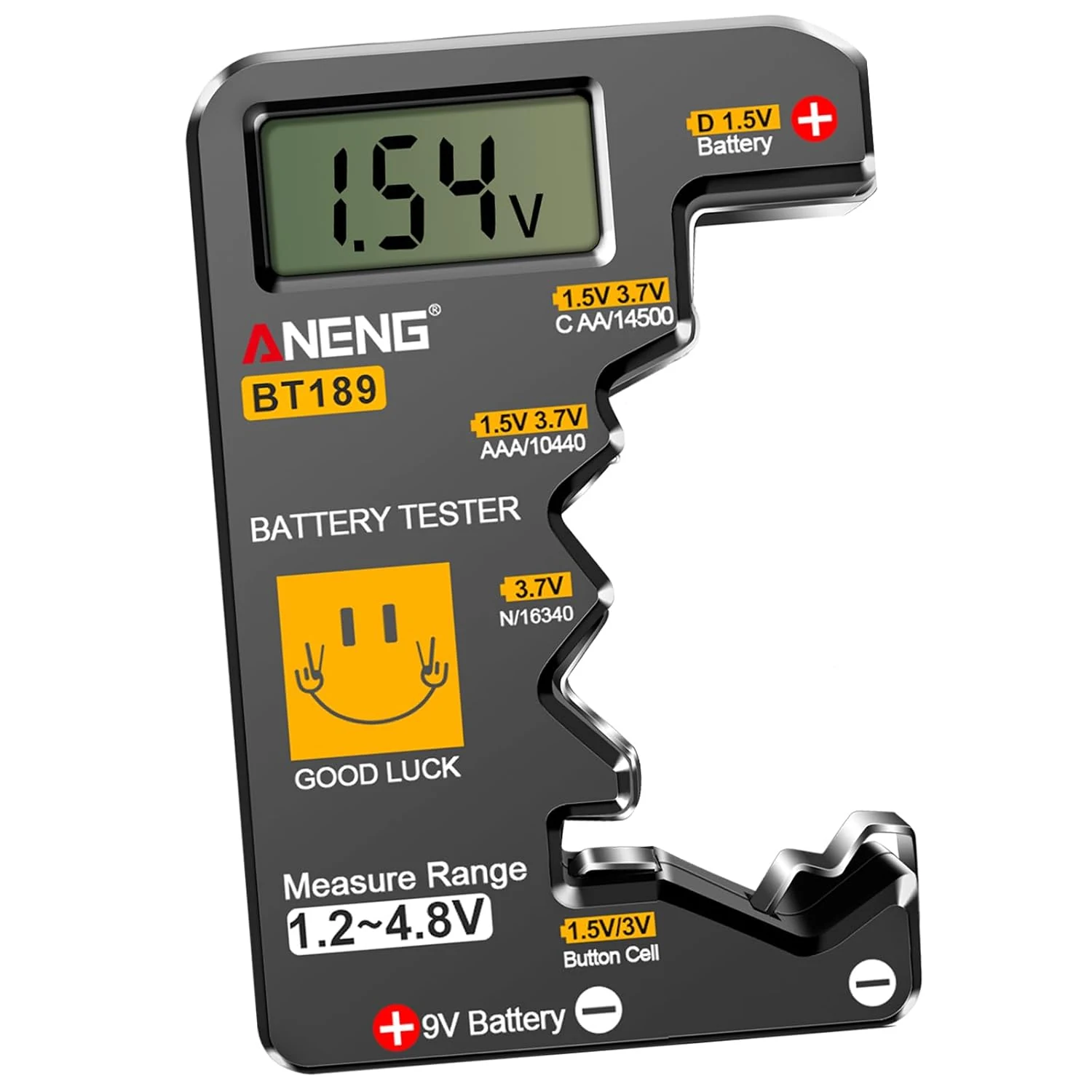
ANENG BT189 Battery Tester for AAA,AA,C,D,9V,F,6F22,1.5V/3V Button Batteries,LCD Display Household Battery Detector,Detects Battery Power By Voltage,Universal Battery Checker
The ANENG BT189 is a compact, no-fuss battery checker with an LCD voltage display for common household cells and coin batteries. It is designed to make quick pass or fail decisions, and reviews highlight how easy it is to use, even for kids. The main tradeoff to consider is that it is not intended for testing rechargeable batteries.
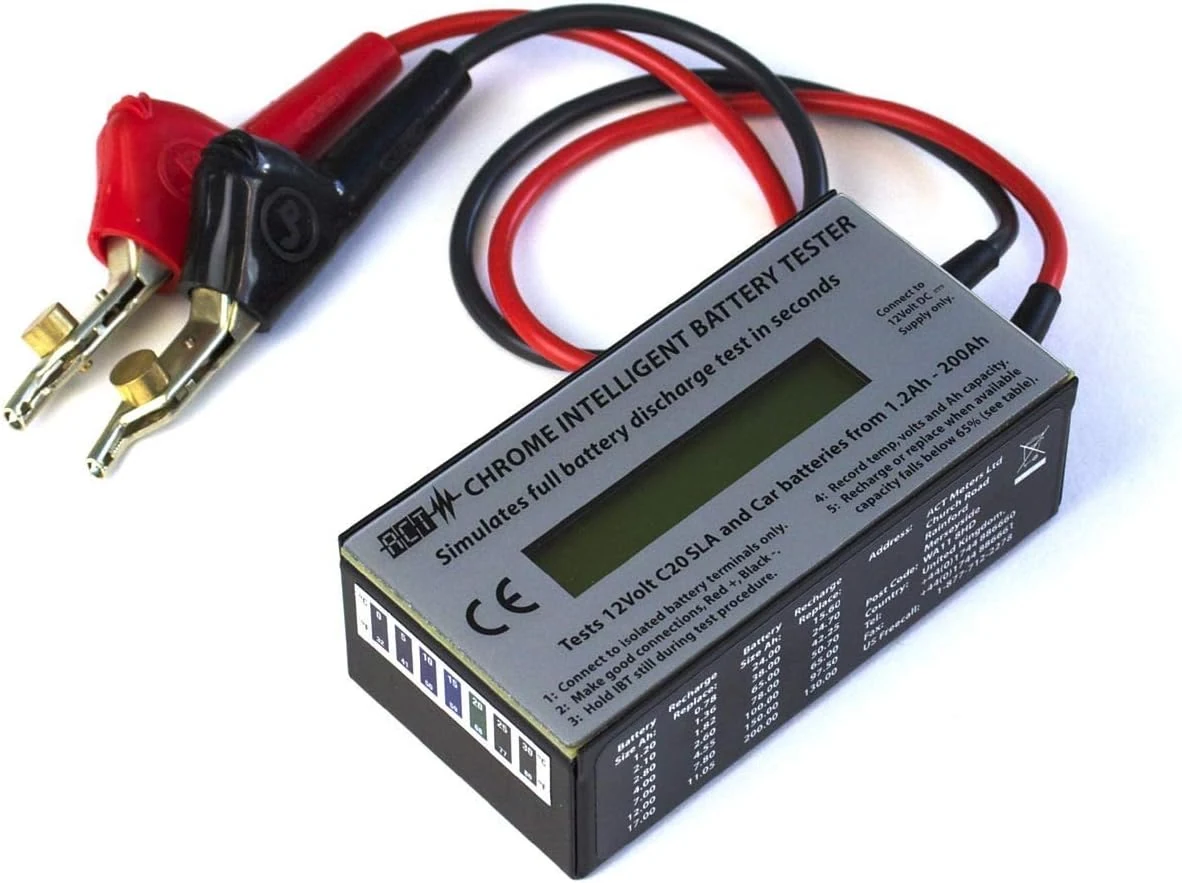
CHROME IBT 12V SLA Intelligent Battery Tester by ACT Meters
The CHROME IBT is a battery tester designed specifically for 12V sealed lead acid (SLA) batteries, aimed at buyers who need fast, practical checks for routine service. It has clear strengths for SLA-focused use, but buyers should be sure they are testing the right battery type and expectations for testing match their workflow.
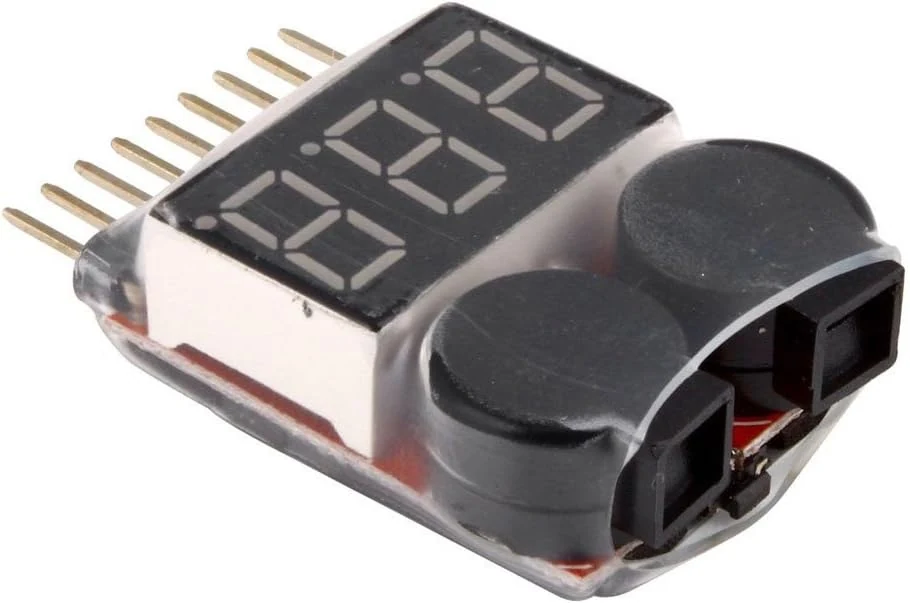
yueton Rc 1-8s Lipo Battery Tester Monitor Low Voltage Buzzer Alarm Voltage Checker
The yueton RC 1-8S LiPo battery tester is a small balance-lead voltage checker designed to help you avoid over-discharging by showing total and per-cell voltage, plus a loud low-voltage buzzer with adjustable alarm. It is best for RC pilots who want a quick “plug in and read” check, with the main tradeoff being a somewhat loud alarm and limited guidance for use.