Proxicast Coaxial Lightning Arrester/Suppressor with UHF SO-239 Female Connectors (ANT-233-002)
Quick take
This inline coaxial lightning arrester is made for protecting VHF/UHF and HF through 0 to 3 GHz antenna feedlines, using a gas discharge tube to shunt surge energy to ground. It includes two SO-239 female connectors for a straightforward, inline install and supports DC pass-through for powered antennas or LNAs. The biggest caveat is that performance depends heavily on correct grounding and weather-sealing, and very high-power use may require attention to the discharge tube rating.
Pros and cons
Pros
- Inline design with UHF female (SO-239) connectors for RF coax feedline protection.
- Wide coverage from DC to 3 GHz, built for ham/CB and two-way radio antenna systems.
- Low RF impact, engineered for insertion loss under 0.2 dB and low VSWR (under 1.2:1).
- DC pass-through supports active antennas or LNAs powered over coax.
- Nickel-plated brass body and an outdoor-rated, replaceable gas discharge tube approach.
Cons
- Proper grounding is essential, including using a short, heavy-gauge copper run to your earth ground.
- For higher-power transmit setups, buyers may need to verify the discharge tube and real-world handling match.
- Outdoor installation still requires weather-sealed coax connections to keep the assembly reliable.
What buyers think
Buyer-review evidence is limited in quantity, but the comments that exist consistently focus on build quality, ease of installation, and practical value for ham radio and other antenna stations. Several buyers describe the unit as well-made and straightforward to fit inline, and at least one report connects the device to preventing damage after a lightning surge. One review also flags a high-power limitation and suggests considering a higher-voltage gas discharge tube for stronger transmit use, while another mentions a simple waterproofing tweak around the discharge tube cover.
What this coaxial lightning arrester is for
The Proxicast ANT-233-002 is designed to be installed in-line between an outdoor antenna feedline and the radio or equipment it protects. Because coax can carry high-energy transients and static-related surges, a coaxial surge arrester helps provide a path to ground when excessive voltage appears on the line, including from nearby lightning activity.
It is intended for RF systems in the ham, CB, GMRS/LMR, marine VHF, and two-way radio space (and other antenna setups within its frequency range). It is also relevant if you run an active antenna or an LNA powered through the coax, since it supports DC pass-through.
Key features that affect real-world use
0 to 3 GHz operation for HF through UHF
Unlike narrowband protectors, this model is specified for DC through 3 GHz operation, which makes it a better fit for multi-band ham stations, wide-range receivers, and many VHF/UHF two-way radios.
UHF SO-239 female to SO-239 female, inline installation
With two UHF female (SO-239) connectors, the arrester sits in-line with your 50-ohm coax. That simplifies integration compared to solutions that require adapters or completely different connector types.
Low insertion loss and low VSWR
The goal with RF protectors is to minimize signal degradation. This model is engineered for low insertion loss (under 0.2 dB) and low VSWR (under 1.2:1), which helps reduce the risk of measurable performance loss due to the protection hardware itself.
Gas discharge tube design with repeatable, replaceable protection
The arrester uses a 230V gas discharge tube (GDT) concept, which diverts excess voltage when triggered and then returns to a non-conductive state after the surge passes. The tube is described as replaceable, which matters if the protector takes a direct hit or repeated surge events over time.
DC pass-through for powered antennas and LNAs
If your station powers an active antenna element or LNA through the coax, DC pass-through is important. Without it, some powered setups simply will not function. This design is intended to allow DC along the coax path in addition to RF.
Pros and cons, mapped to buyer fit
Best for
- Ham and two-way radio operators who want inline coax protection for outdoor feedlines.
- Anyone protecting equipment where the coax enters the building and surges are a concern.
- Stations using 50-ohm coax and SO-239 connections.
- Setups that need DC pass-through to power an LNA or active antenna from the shack.
Who should consider alternatives
- Transmitters that push into very high RF power may want to confirm surge tube and operating expectations before relying on this model.
- Buyers who do not plan to do correct grounding, or who cannot weather-seal outdoor coax connections, may not get meaningful protection.
- Anyone whose coax connectors are not SO-239 will need to account for adapters and additional insertion loss or mismatch.
Installation guidance that really matters
Even the best coax lightning arrester cannot do its job without grounding. The unit is meant to be installed outdoors close to where the coax enters the building or near the equipment it protects, and then connected to earth ground using a short, heavy-gauge copper wire.
Practical installation tips to keep in mind:
- Use the included ground lug and connect it to your earth ground system, using a thick copper wire (the guidance specifies #10 AWG as a minimum, with #8 preferred).
- Weather-seal the coax connections at the arrester for outdoor use.
- Minimize slack and keep the ground path short to reduce impedance in fast transients.
Is the Proxicast ANT-233-002 worth it?
It’s a solid pick if you need inline coaxial lightning protection that stays compatible with common SO-239 (UHF female) antenna feedlines, while also supporting DC pass-through for active antennas or LNAs. The low insertion loss and low VSWR specs make it easier to justify in real receiver and multi-band ham setups where you do not want extra performance loss.
The main reason to slow down before buying is fit verification. Make sure you can provide proper grounding, weather-sealed outdoor installation, and confirm that your transmit power profile and surge-tube expectations line up with the 230V GDT design for your station.
FAQs
Does this coax lightning arrester pass DC for active antennas or LNAs?
Yes. It is designed for DC pass-through, so DC power can travel through the coax to support active antenna devices or LNAs that rely on coax power.
Will it noticeably hurt my signal?
The product is engineered for low RF impact, with specifications targeting insertion loss under 0.2 dB and VSWR under 1.2:1. Actual results still depend on coax quality, connector condition, and overall installation tightness.
Where should I install it on my antenna coax feedline?
Install it between the outdoor antenna feedline and the equipment it protects, ideally outdoors close to where the coax enters the building. Connect the ground lug to earth ground to provide a safe discharge path.
What grounding wire should I use?
Use heavy-gauge copper grounding wire. The guidance specifies a minimum of #10 AWG (with #8 preferred) copper wire to connect the ground lug to a suitable earth ground point.
How often do I need to replace the gas discharge tube (GDT)?
The GDT is a sacrificial component designed to absorb surge events. It should be replaced if you suspect a direct strike or if signal loss occurs, and routine preventative maintenance guidance suggests replacing it every 3 to 5 years.
Is this suitable for high-power ham transmissions?
It is specified with a 230V discharge voltage GDT and a max power rating listed for the device. If your operating power is high, it is smart to verify your setup expectations for surge performance and consider matching the discharge tube to your use case.
Specifications
| Product Title | Proxicast Coaxial Lightning Arrester/Suppressor with UHF SO-239 Female Connectors - Pro-Grade Coax Cable Surge Protector for RF, HF, VHF, UHF, CB, Ham, Two-Way Radio and Other Antennas (ANT-233-002) |
|---|---|
| Category | Electronics > Accessories & Supplies > Power Strips & Surge Protectors > Surge Protectors |
| Brand | Proxicast |
| Manufacturer | Proxicast |
| Model Number | UHF-Female/UHF-Female |
| Color | UHF-Female/UHF-Female |
| AntennaDescription | Radio, Wi-Fi, Cellular, GPS |
| UPC | 850021295295 |
| Number of Items | 1 |
| Mfr Part Number | ANT-233-002 |
| Warranty Description | 1 year |
| Unit Count | 1.0 Count |
| Number of Channels | 1 |
| Impedance | 50 Ohms |
| Antenna | Radio, Wi-Fi, Cellular, GPS |
| Number of Packs | 1 |
Available variants
Color
- UHF-Female/UHF-Female
- UHF-Male/UHF-Female
Recommended next
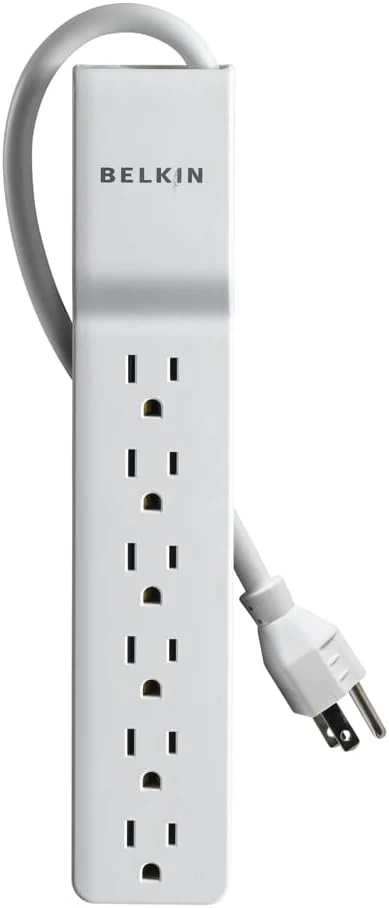
Belkin 6-Outlet Surge Protector Power Strip, UL-Listed w/ 6 AC Outlets & 10ft/3M Cord, ABS, Overload and Overvoltage Protection for Personal Electronics, Small Appliances, & More - 720 Joules, Plastic
Belkin’s 6-outlet surge protector turns one wall plug into six UL-listed, surge-protected outlets with a 10 ft cord. It’s a good fit for home offices and entertainment setups where you want space-saving outlet access and basic protection for everyday electronics, with a main caveat that it doesn’t include a visible “protected” status light.
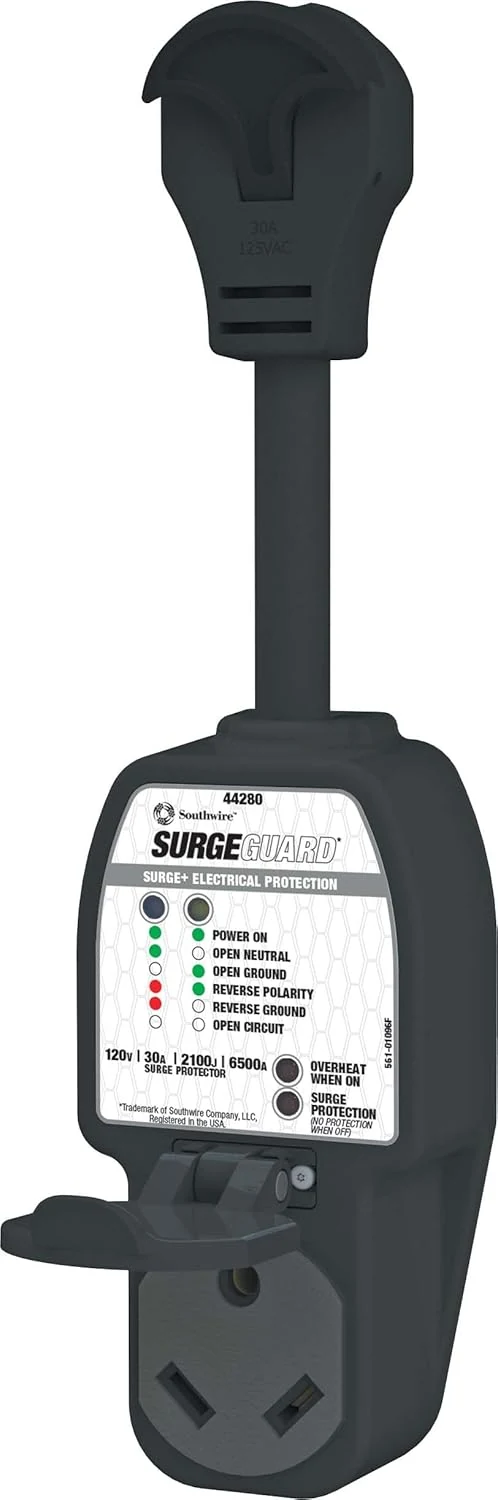
Southwire Surge Guard™ 30 Amp Portable RV Surge Protector with Enhanced Diagnostics, 2100 Joules, 44280
The Southwire Surge Guard 30 Amp Portable RV Surge Protector (model 44280) is built for travel trailers and pop-ups that want plug-in surge protection plus “enhanced diagnostics” for campground hookups. It’s compact, uses a 30A rating and a 2100-joule protection rating, and includes an LED indicator set to help you verify park power before connecting your RV.
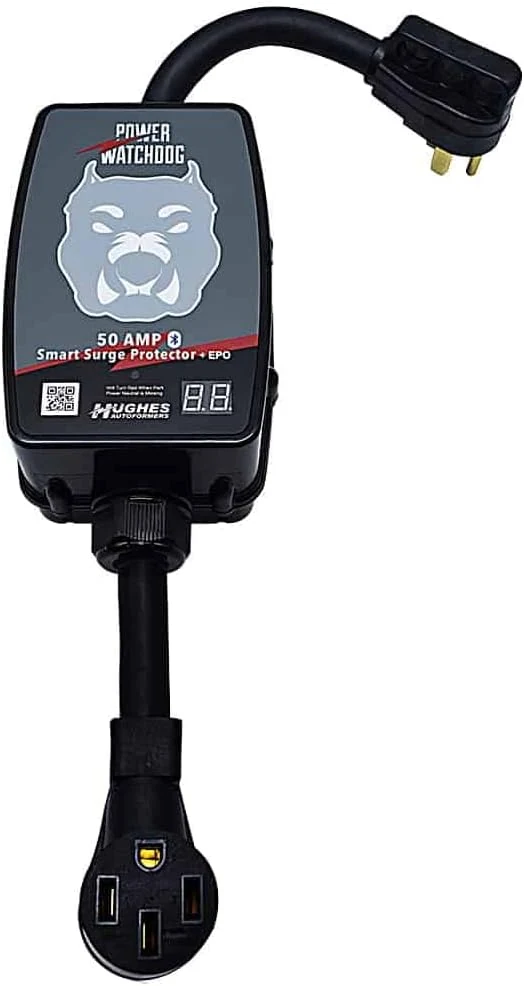
Power Watchdog Smart RV Portable Surge Protector 50 Amp
The Power Watchdog Smart RV Surge Protector (50 Amp) is a plug-in style surge protection and power monitoring solution built for RV shore power. It adds real-time Bluetooth monitoring of voltage, amperage, and wattage, plus automatic shutdown and delayed restart when power is out of safe range, and it uses a replaceable surge module for easier long-term ownership.
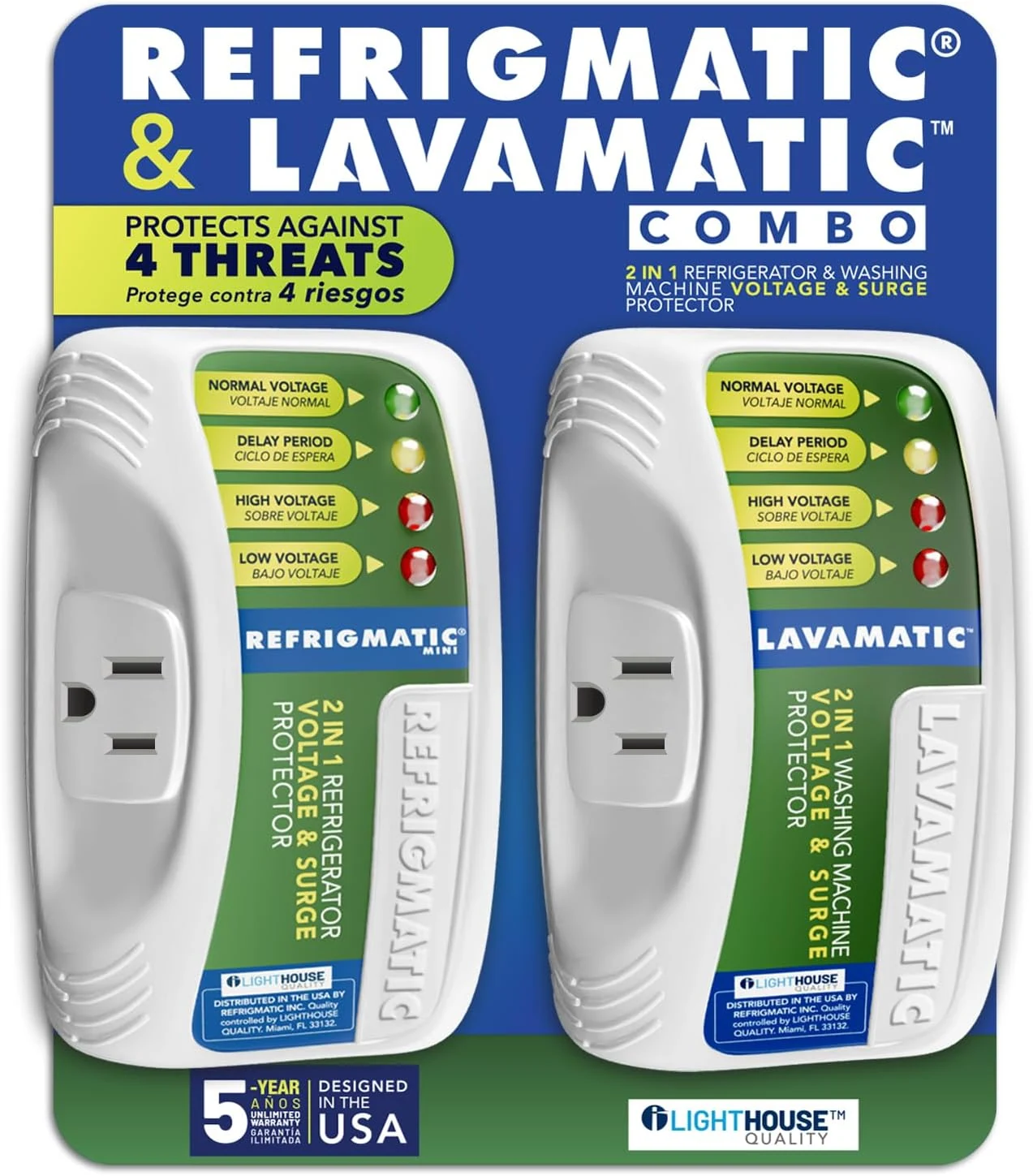
Two Electronic Voltage & Surge Protector Combo (Refrigmatic)
This two-unit surge protector combo is designed to protect a refrigerator and a washing machine from high and low voltage, brownouts, and power surges. Key features include voltage status light indicators and a built-in delay period (30 seconds, with instructions to wait longer for first use) after power returns so appliances do not restart immediately into unstable power.