Eanetf USB to HDMI Adapter + Dual USB C/USB A 3.0 Hub (5 in 1)
Quick take
This 5-in-1 Eanetf adapter turns a single USB connection into an HDMI output plus a small 5-port hub (2 USB-C, 2 USB-A 3.0, and an HDMI expansion). It is a good fit if you need an extra monitor for work and you want added ports in one slim device, but it is more suited to static screen use than gaming or fast-motion video.
Pros and cons
Pros
- Combines HDMI expansion with a compact 5-port hub (dual USB-C, USB-A 3.0, and HDMI).
- Designed for up to 1920x1080 output, with guidance to cap resolution at 1080p if needed.
- Uses built-in driver support on Windows, which can make setup straightforward for compatible systems.
- Short, simple use case: extend your desktop to a TV or monitor from a single adapter.
Cons
- Driver installation may be required, and the process can fail if security software or firewall blocks it.
- Frame rate is relatively low, so it is not recommended for games or HD movie playback where smooth motion matters.
- Not guaranteed to work for every computer connection, since some buyers report it simply would not function when plugged in.
What buyers think
Buyer-review evidence for this adapter is mixed but generally focused on a few practical themes. Several buyers describe it as easy to connect and useful for adding HDMI output for desk or multi-console setups. Others point out that it can require driver installation to get video working. A small portion of buyers report that it did not work when connected to their computer, which suggests compatibility can be system-dependent.
Because the available review snippets are limited in volume and detail, buyer-review evidence is too limited to draw a single, reliable pattern about long-term reliability or performance under different workloads.
What this adapter is for
This Eanetf model is built for people who want two things from one USB connection: (1) an HDMI output to extend a screen, and (2) a few extra USB ports for everyday accessories like a flash drive or other low-power peripherals. It is marketed for Windows use and a wide range of typical setups such as monitors, TVs, projectors, laptops, and consoles.
Ports and display output, in plain terms
- USB hub portion: 5 total ports, including 2 USB-C and 2 USB-A 3.0, plus HDMI as the display expansion interface.
- HDMI portion: supports up to 1920x1080 output for the connected display. If your computer connection is USB 2.0, it may show a lower resolution (for example, 800x600), so USB version matters.
- Resolution settings: if your monitor is set higher than 1920x1080, you may need to adjust down to 1080p for compatibility.
Setup and driver notes you should plan for
Unlike plug-and-play HDMI docks that rely on native display support, this adapter includes a driver installation process. If antivirus software or the firewall interferes, the driver install can fail, so you may need to temporarily adjust security settings during setup (then return them afterward).
If you prefer minimal setup steps, it is worth checking your Windows version and whether your system typically handles USB-to-video adapters without extra work. Also consider that some buyers reported the device would not work at all on their particular computer, so there is some real-world variability.
Performance expectations: best for static screen use
The biggest practical limitation is motion smoothness. The adapter’s frame rate is described as relatively low, which makes it better suited to static or low-motion tasks such as:
- office screen expansion
- monitoring setups
- basic desktop extension for spreadsheets, documents, and dashboards
For fast-moving content like gaming or fluid HD movie playback, it may show dropped frames. If that is your primary use case, you may want to prioritize a different USB graphics solution or a dedicated approach that is designed for higher-motion video.
Pros and cons for different buyers
Who should buy it
- Desk workers who want one extra HDMI display plus a few extra ports in a compact form.
- People on older laptops (Windows) with limited ports, especially when they mostly need desktop extension rather than high-motion media.
- Home setups where a TV or monitor is used for static interfaces, monitoring, or casual console use where latency and motion are less critical.
Who should avoid it
- Gamers or anyone focused on smooth, responsive video output for action-heavy content.
- Buyers who want zero driver hassle, since driver installation may be required.
- Anyone whose system has had trouble with USB-to-HDMI adapters before, given that some reviews report the adapter did not work on their computer.
Is it worth it?
If you need an easy way to extend your screen and add a handful of ports from a single connection, this adapter is a reasonable, budget-friendly option. The value hinges on two things: whether your Windows system supports the driver process smoothly, and whether your display use is mostly static. If your goal is gaming or consistently smooth video playback, the low frame rate guidance is a clear signal to look for a different solution.
Alternatives to consider
If the main limitation is motion smoothness, compare options by these criteria:
- Expected use: static desktop extension versus gaming/video playback.
- Plug-and-play behavior: some models rely on native support, others require drivers.
- Port priorities: whether you truly need dual USB-C plus USB-A 3.0 on the same device, or you could split the hub and display adapter across two simpler products.
Without specific competitor models listed here, the best approach is to match the adapter type to your content style and your system’s willingness to install and run USB display drivers.
FAQ
Do I need to install a driver to use this adapter?
Setup may require driver installation on Windows. If antivirus or the firewall interferes, installation can fail, so you may need to adjust security settings during setup.
What resolution does it support?
It is intended to output up to 1920x1080. If your computer is using a USB 2.0 connection, the adapter may display at a lower resolution, and if your monitor is set above 1080p, you may need to change it to 1920x1080.
Is this adapter good for gaming or HD movies?
It is generally better for static screen use, because the frame rate is described as relatively low. That makes it less suitable for games or HD movie playback where dropped frames may matter.
Will it work with any Windows laptop?
It is designed for Windows systems and supports a range of Windows versions. However, real-world compatibility can vary, and some buyers report it did not work on their specific computer.
Does it also act as a USB hub?
Yes. It includes hub ports along with HDMI expansion, with a total of 5 ports featuring 2 USB-C and 2 USB-A 3.0 ports.
Can I use it with a USB 2.0 port?
Using USB 2.0 can reduce the displayed resolution (example guidance includes 800x600), so USB 3.0 ports are preferred if you want 1080p output.
Specifications
| Product Title | USB to HDMI Adapter, Eanetf Dual USB C USB A 3.0 Hub: 5 Ports with 2* USB-C and 2* USB-A and 1* HDMI Extend for TV,DVD Player,Projector,Monitor,Laptop,PS4,Flash Drive, HDD,Xbox, Printer etc - 5 in 1 |
|---|---|
| Category | Electronics > Computers & Accessories > Computer Accessories & Peripherals > USB Hubs |
| Brand | Eanetf |
| Manufacturer | Eanetf |
| Operating System | Windows |
| Item Weight | 0.04 Kilograms |
| Hardware Interface | HDMI, USB |
| Compatible Devices | Televisions, DVD Players, Projectors, Monitors, Laptops, PS4, Xbox, Printers |
| Total Usb Ports | 5 |
| Data Transfer Rate | 5000 Megabits Per Second |
| Number of Ports | 5 |
| Minimum Required Operating System Version | Windows XP |
| Item Dimensions L x W x H | 1.5"L x 1"W x 0.5"H |
| Enclosure Material | Plastic |
| Total USB Ports | 5 |
Recommended next
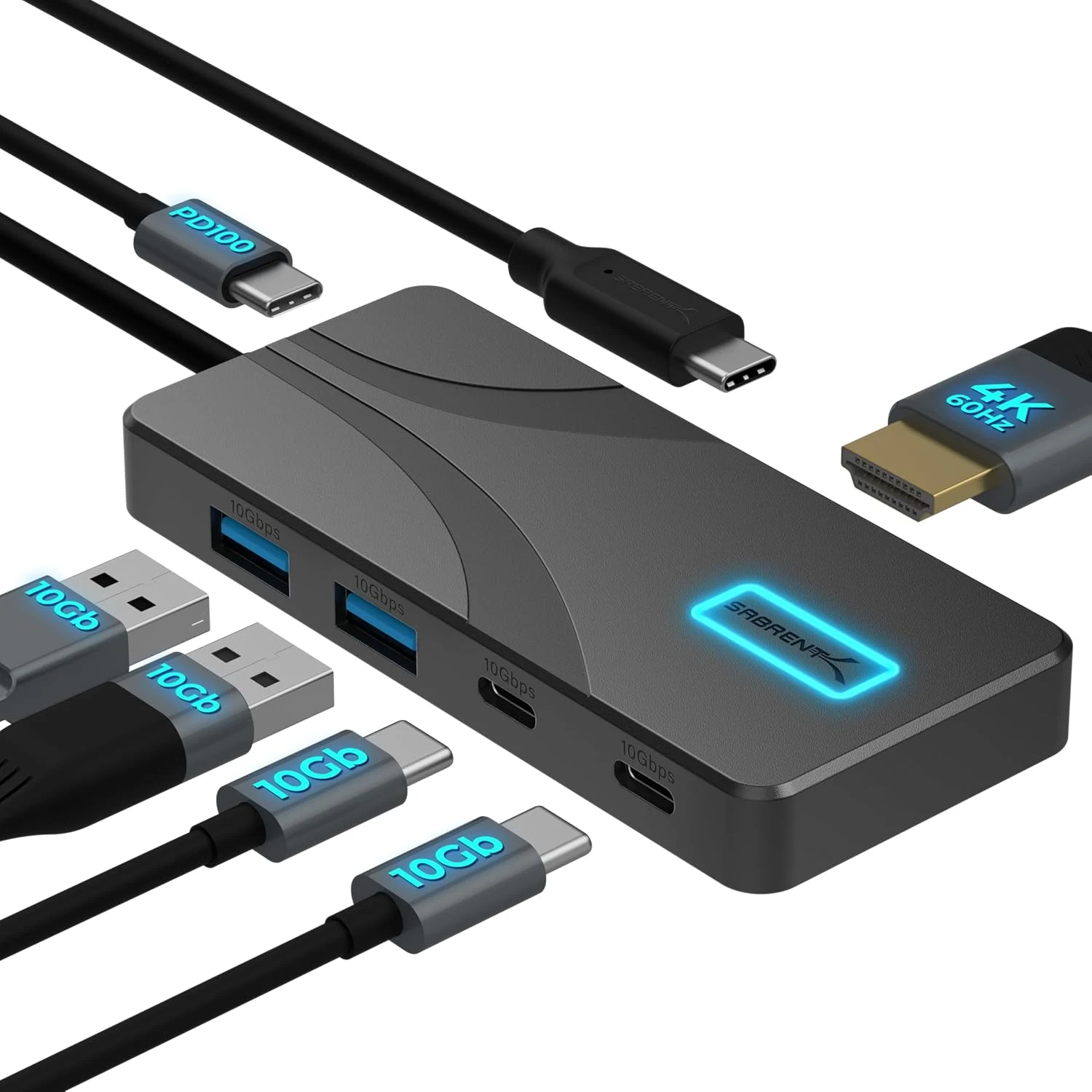
SABRENT USB C Hub 5-in-1, 10Gbps USB-A & USB-C Ports, Single 4K@60Hz HDMI, 100W PD Input, 80W Laptop Charging (HB-TG5P)
The SABRENT HB-TG5P is a compact USB-C hub that combines 10Gbps USB data, a single HDMI display output up to 4K@60Hz (HDR and Dolby Vision support), and up to 80W pass-through laptop charging from your own USB-C PD power adapter. It is a strong fit for MacBook, iPad, and USB-C laptops that support DisplayPort Alternate Mode, but the hub includes a manual power switch and does not auto-enable after a Mac reboot in some setups.
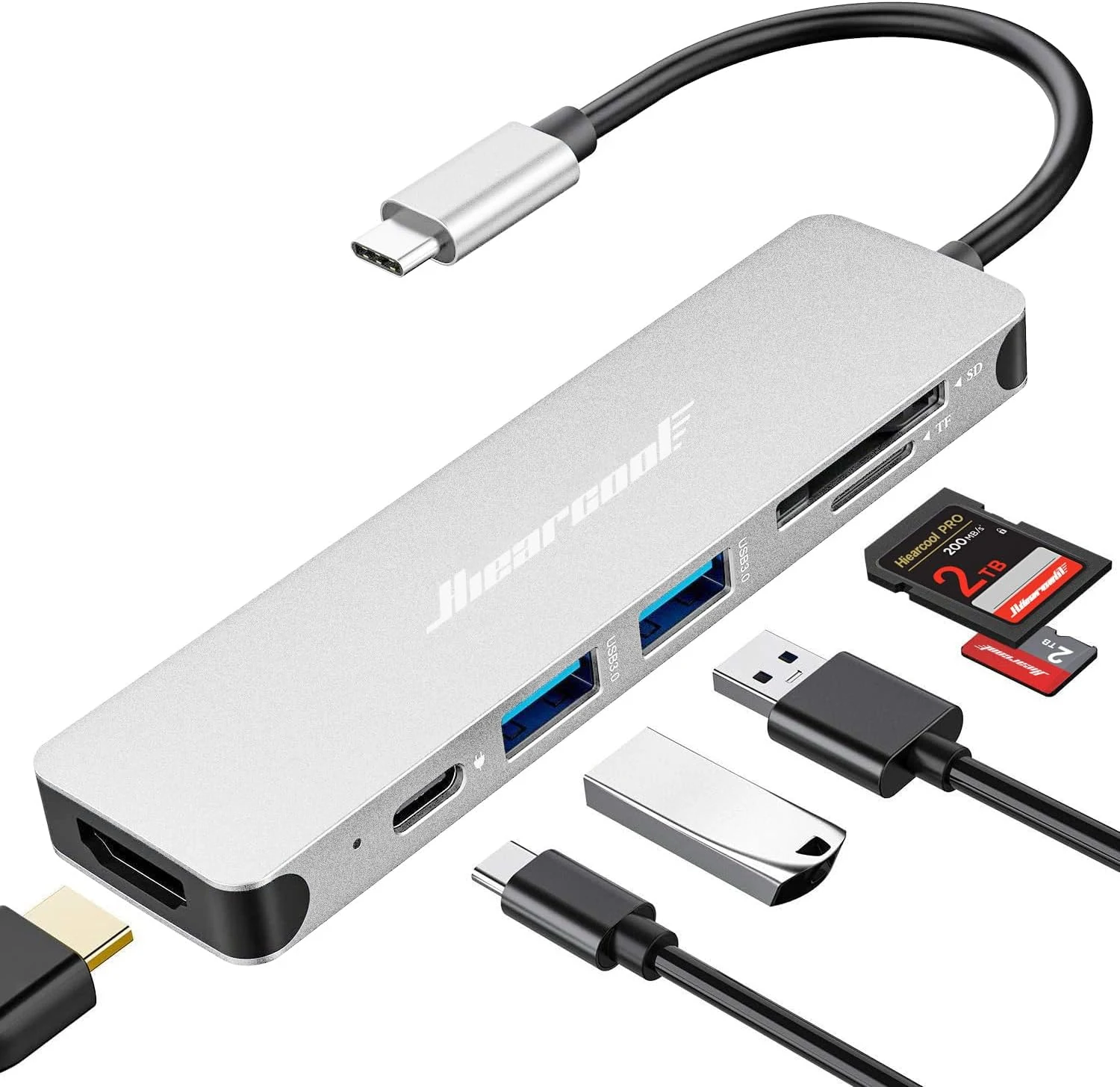
Hiearcool USB C Hub Multi-Port Adapter, 7-in-1 USB-C Dongle with 4K HDMI 100W PD SD/TF Card Reader
The Hiearcool 7-in-1 USB-C hub adds HDMI (up to 4K at 30Hz), two USB-A 3.0 ports, and SD/microSD card slots, plus USB-C power delivery pass-through (up to 100W) in a compact aluminum design. It’s a strong pick for MacBook and Windows laptop users who want a lightweight “desktop-lite” setup for work, school, and travel, with the key caveat that HDMI video requires USB-C DisplayPort Alt Mode support.
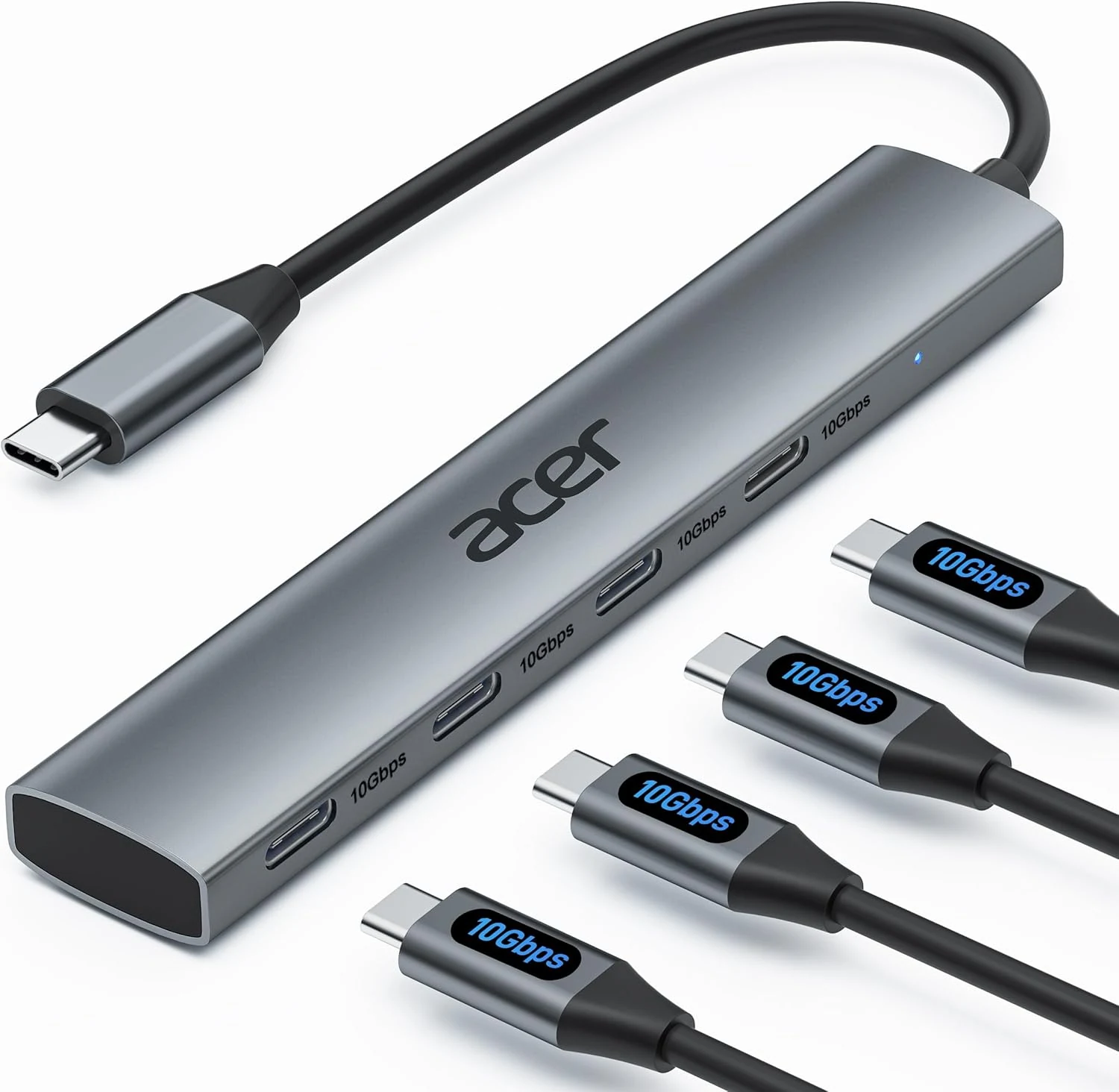
Acer USB C Hub, 10Gbps Type C Splitter with 4 USB-C 3.2 Ports
Acer’s 4-port USB-C hub adds four USB-C data connections to a single USB-C port, with up to 10Gbps throughput for fast transfers. It’s a solid, plug-and-play pick for keyboard, mouse, printers, scanners, and external drives, but it does not support charging or any video/monitor output.
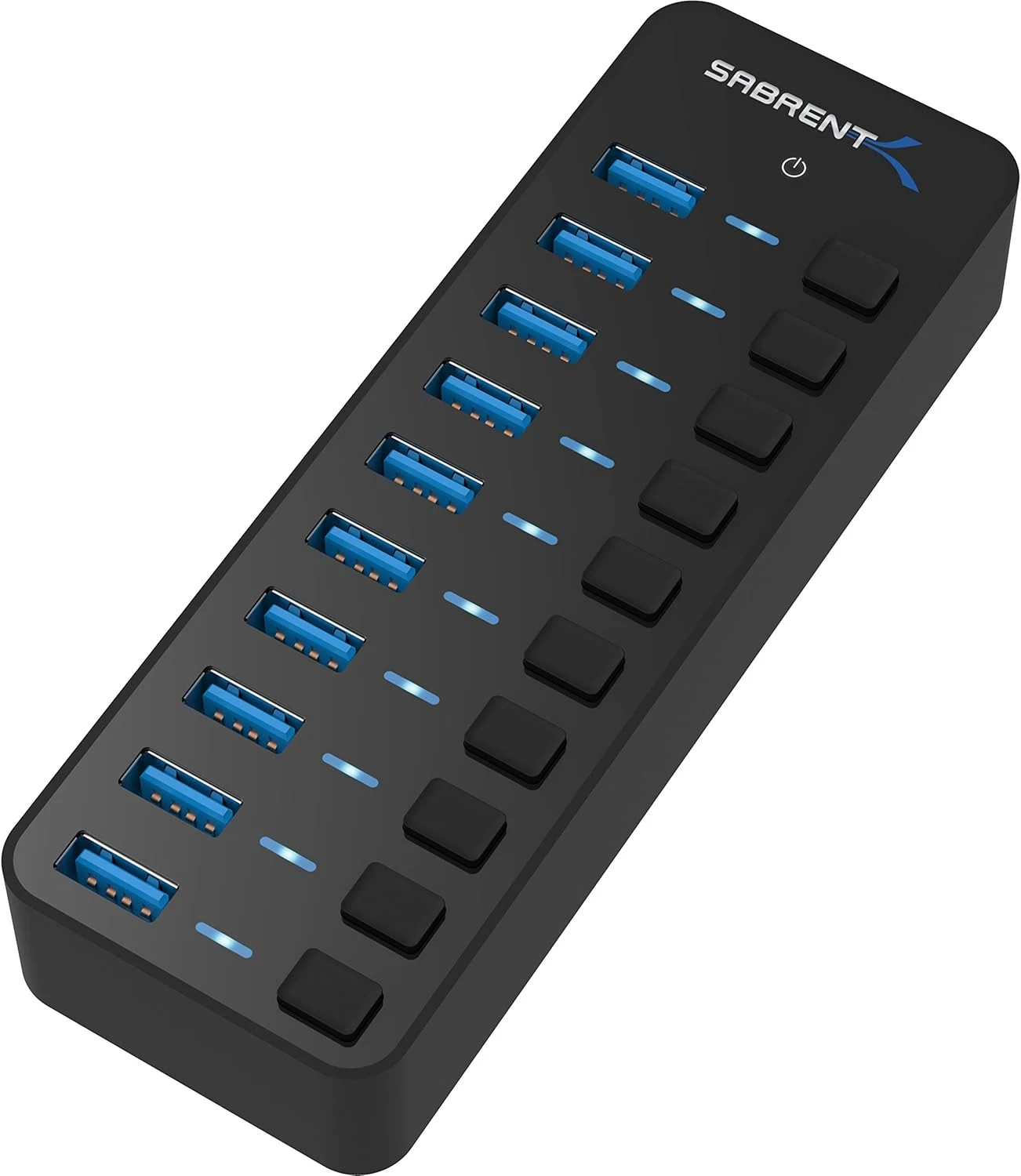
SABRENT 10-Port 60W USB 3.0 Hub with Individual Power Switches
A compact, powered 10-port USB 3.0 hub for people who need more connections than their PC has, especially when devices need consistent power. Individual port power switches and LEDs make it easier to manage multi-device setups, but you should consider whether your use case requires higher-than-usual data performance.