WayPonDEV T-mini Plus 360 Degrees 2D Lidar Sensor Scanner, 12m(40ft)
Quick take
The WayPonDEV T-mini Plus is a compact 360-degree 2D lidar module that uses time-of-flight (ToF) ranging to build a surrounding point cloud for robotics and obstacle avoidance. It targets makers and developers who want a relatively small form factor (45 g) and UART (3.3V) connectivity, with ROS/ROS2 support to help with integration. The biggest caveat is that you still need to plan for power, wiring, and software setup since this is a module, not a finished autonomous system.
Pros and cons
Pros
- 360° mechanical scanning with point cloud output for full surrounding awareness
- ToF specs for typical indoor robotics ranges, up to 12 m (40 ft), angular resolution 0.54°
- UART-based communication using 3.3V levels, designed to connect to common robot controllers
- ROS/ROS2-focused SDK and driver support intended to simplify integration
Cons
- Integration workload is on you, including protocol handling and controller power planning
- Buyer-review evidence is limited overall (small number of total reviews)
- Not a plug-and-play consumer sensor, documentation and developer setup matter
What buyers think
Buyer-review evidence is limited, but the available feedback centers on a few consistent themes. Several buyers describe the module as compact, well built, and suitable for robotics prototyping. Integration support comes up repeatedly, including the usefulness of SDKs/drivers and the experience of getting help while setting it up. Performance feedback in the reviews is generally positive for making 360-degree sensing work for navigation, mapping, and obstacle avoidance, and some mention that the sensor continued to function in challenging lighting conditions. At the same time, not all reviews include detailed performance measurements, so patterns about real-world reliability across many environments are not fully proven.
Key specs that matter for robotics projects
- Ranging (distance): 0.05 m to 12 m
- Scan coverage: 360° omnidirectional 2D scanning (mechanical rotation)
- Angular resolution: 0.54°
- Scanning frequency: 6 to 12 Hz
- Ranging frequency: up to 4000 Hz
- Output format: point cloud data for mapping and obstacle avoidance workflows
- Connectivity: 3.3V level UART serial interface
- Size and weight: 38.6 x 38.6 x 33.9 mm, about 45 g
Design and integration notes (the real decision factors)
This lidar is built for developers who care about how the sensor talks to a controller. The 3.3V UART interface means you can plan for integration with SBCs and MCUs using a compatible serial adapter or a board that supports UART at the correct logic level. It also matters that the device outputs point cloud data and is intended to work with ROS/ROS2 style drivers, which can speed up development if your stack already uses those tools.
Power planning is another practical consideration. Some builders note that mobile or battery-backed setups may require attention to current draw. Since the module is small and designed for embedded use, it is best treated as part of a system design: power source selection, wiring quality, and software configuration are all part of making the lidar behave the way you expect.
Pros and cons for different buyer types
Best for
- Robot navigation and obstacle avoidance where you need 360° 2D environmental sensing
- Makers and robotics developers who are comfortable integrating sensors via UART and software drivers
- ROS/ROS2 users looking for a lidar module that fits into existing perception pipelines
- Projects where size matters (compact module, lightweight for mobile platforms)
Who should look elsewhere
- Beginners wanting plug-and-play hardware with minimal setup, because developer workflow is part of the value
- Teams that need longer range than 12 m for their specific environment, since this model’s stated max range is 12 m
- Buyers who need a full, turn-key lidar system (this is a sensor module, not a complete navigation platform)
Price and availability
The listed price is positioned as a budget-to-midrange option for a 360° 2D lidar module aimed at makers. Availability is described as typically shipping within about a week. If you are comparing alternatives, focus on total integration effort, not only the headline range, because the controller and software environment can dominate your timeline.
Verdict
The WayPonDEV T-mini Plus is a strong fit for robotics developers who want compact, 360-degree 2D lidar sensing, with UART communication and ROS/ROS2-oriented support. It is less ideal for shoppers who want a fully self-contained, plug-and-play gadget. If you are building an autonomy project and can handle the basics of wiring, power, and driver setup, this model’s range, scan characteristics, and point cloud workflow are aligned with common navigation and obstacle-avoidance use cases.
FAQ
How far can the WayPonDEV T-mini Plus detect objects?
Its stated measuring radius is 0.05 m to 12 m, which is designed for many indoor robotics and obstacle-avoidance scenarios.
Is this a 2D or 3D lidar?
It is a 360-degree 2D lidar sensor scanner. It produces point cloud data from a rotating 360° scan, but it is not a 3D spinning multi-layer lidar in the typical sense.
What interface does it use to connect to a controller?
It uses a 3.3V level UART serial port for communication and data output.
Does it support ROS or ROS2?
Yes, it is intended to work with ROS/ROS2 through available SDK and driver support aimed at simplifying integration.
What scan speed should I expect?
It supports a scanning frequency of about 6 to 12 Hz. The ranging frequency is specified up to 4000 Hz.
Is it suitable for mobile robots or drones?
It is designed for robotics use and is compact and lightweight. However, like any embedded sensor, you should plan for power requirements when using it in mobile or battery-powered setups.
Specifications
| Product Title | WayPonDEV T-mini Plus 360 Degrees 2D Lidar Sensor Scanner, 12m(40ft) ToF Micro Ranging Module Rangefinder for Robots Drones UAV Obstacle Avoidance, Support ROS/ROS2 Win Linux SDK |
|---|---|
| Category | Electronics > Security & Surveillance > Radio Scanners |
| Brand | WayPonDEV |
| Manufacturer | WayPonDEV |
| Model Number | Tmini Pro |
| Color | Black |
| Item Weight | 50 Grams |
| Power Source | Corded Electric |
| Maximum Range | 12 Meters |
| Mounting Type | Wall Mount |
| Battery Description | Battery not included |
| Compatible Devices | Robotics Systems, Security Systems, Smart Home Devices |
| Antenna Location | Driveway, Garage, Garden, Terrace |
| Frequency | 4000 Hz |
| Mfr Part Number | Tmini Pro |
Recommended next
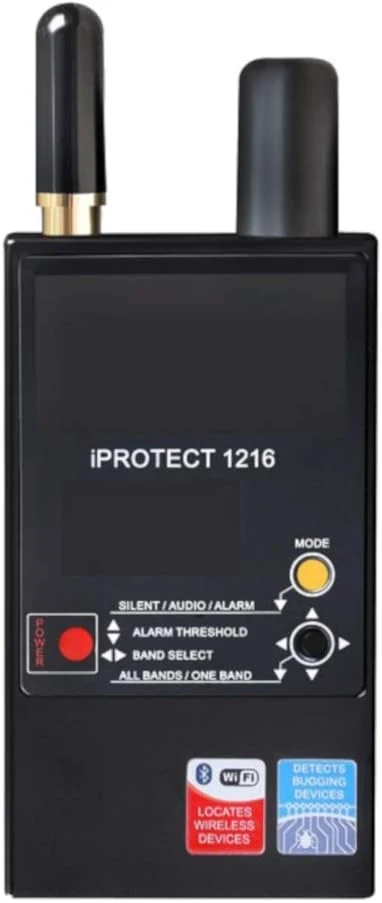
iProtect 3 Band RF Anti-Spy Counter Surveillance Radio Frequency Bug Detector (DD1216)
The iProtect 3 Band RF anti-spy detector is a portable, battery-powered RF scanner designed to help identify suspicious transmissions across multiple frequency bands. It uses two built-in OLED displays and a microcontroller-based interface, with stated sensitivity improvements via three-band separation, plus a shock-resistant CNC milled duralumin body for field use.
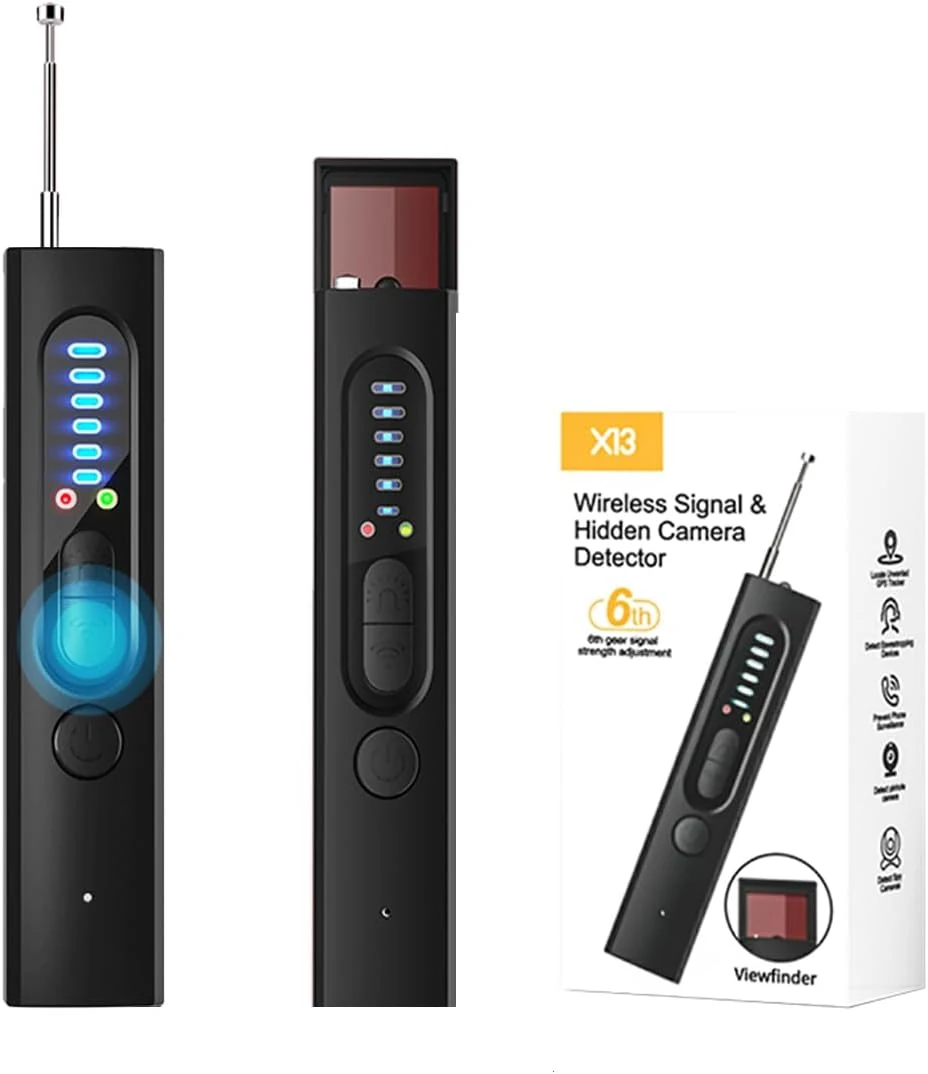
Hidden Camera Detectors, 2024 Upgraded Anti-Spy RF Detectors, Listening Device Detector, GPS Tracker Detector, RF Wireless Signal Scanner for Home Office Travel
This DOMISIGN RF wireless signal scanner is designed to help you check hotel rooms, rentals, and your home for potential hidden cameras or listening devices. Buyers generally like how portable it feels and report that it can detect nearby cameras quickly, but review evidence is limited and results can depend on what types of devices you are trying to find.
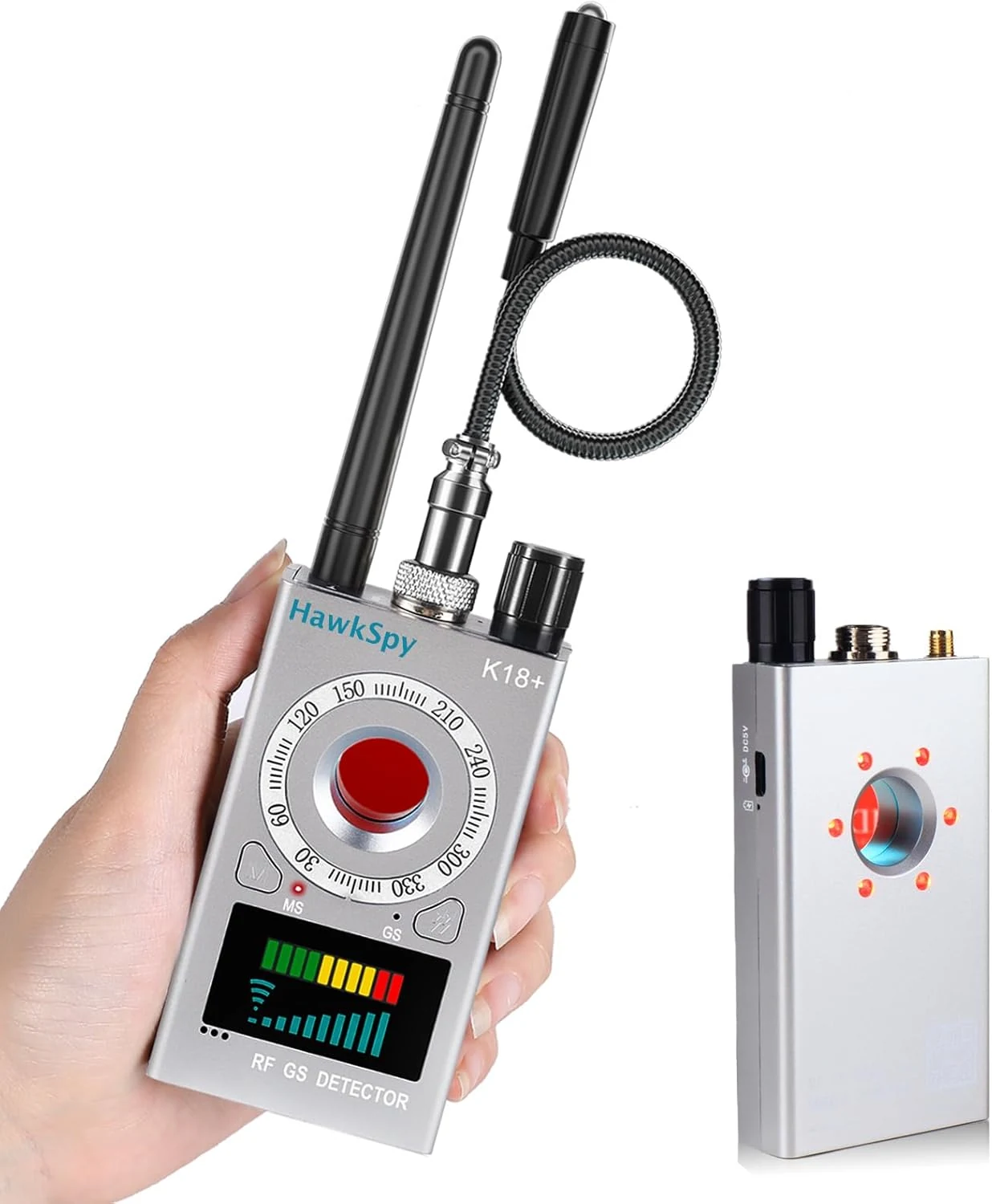
K18 Hidden Camera Detectors Bug & GPS Tracker Scanner Spy review
The HawkSpy K18 is a portable hidden camera detector and “bug” scanner with dual sound and vibration alerts, plus LED infrared detection intended to help visually locate concealed camera lenses. It’s designed for travelers and business users checking hotel rooms, rentals, offices, and vehicles, but buyer experiences are mixed, so it’s best viewed as a risk-reduction tool, not a guarantee.
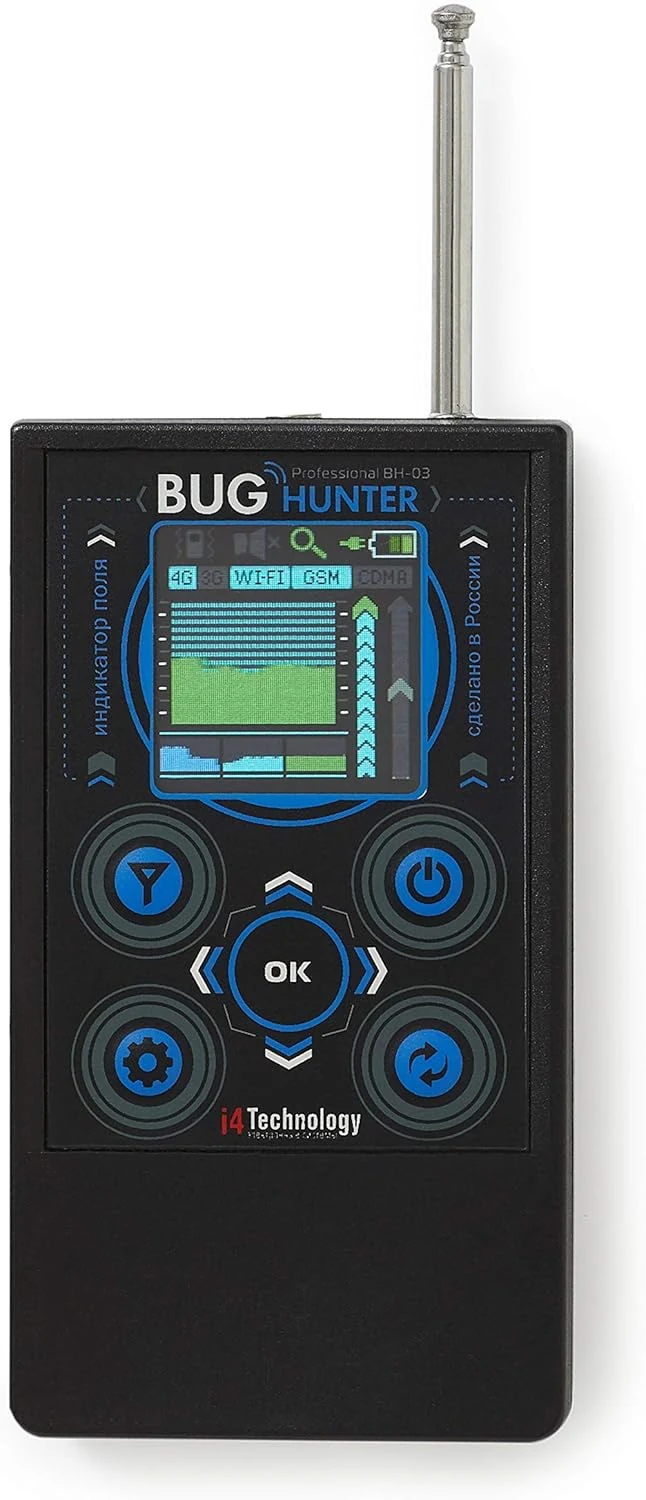
i4 Technology BH-03 Anti Spy Bug Detector
The i4 Technology BH-03 is an RF signal detector aimed at spotting potential wireless surveillance sources across a broad 10 to 3500 MHz range. It offers fast “touch” scanning, an OLED display with signal history, and “Security” mode for ongoing monitoring, but the buyer review evidence is thin and there’s at least one reported durability issue with the antenna.