UFSVVOLF AI Smart Glasses with Camera, 4K HD Video Audio Recording
Quick take
These UFSVVOLF smart glasses blend a built-in 4K camera with 164+ language real-time translation, Bluetooth 5.3 hands-free calls, and photochromic lenses that darken outdoors. They’re best for commuters and travelers who want “capture, translate, and communicate” in one lightweight pair, but buyer-review evidence is limited, so it’s smart to verify how well the features work for your specific use case.
Pros and cons
Pros
- 4K high-definition first-person recording with anti-shake support for smoother footage.
- Real-time translation for 164+ languages with fast object recognition response.
- Bluetooth 5.3 pairing plus dual microphones with ENC noise cancellation for clearer calls.
- Open-ear audio design helps you stay aware of ambient sounds.
- Photochromic lenses automatically adjust brightness outdoors, reducing the need for extra sunglasses.
Cons
- Review evidence is thin (only a few buyer snippets), so long-term reliability and consistency are hard to confirm.
- Battery life is modest compared with “all-day media” expectations, depending on whether you’re recording, translating, and making calls.
- No GPS is included, so navigation needs a phone app if you plan to rely on location-based features.
What buyers think
Buyer-review evidence is limited, but the available snippets consistently highlight the same core use cases: commuting and calls, travel translation, everyday outdoor recording, and general comfort. The translation experience is described as smooth with little perceived delay. Noise cancellation for hands-free calls is emphasized, with call audio described as clear even in noisier environments like public transit. For recording, buyers mention stable, clear 4K video suited to walking and cycling, and they also value the open-ear design for safety. Comfort and usability come up repeatedly, including an “easy to set up” experience and a fit that does not feel overly bulky. The overall theme is that these glasses aim to replace multiple daily tools, and the buyers who tried them felt the functions worked in real-world routines.
What these AI smart glasses are for
UFSVVOLF positions this pair as a practical wearable, not just “camera glasses.” The feature set is built around three everyday problems:
- Capturing moments hands-free. A built-in 4K camera supports 4K photo shooting and 4K anti-shake video recording for first-person footage.
- Bridging language gaps on the go. Real-time translation is designed to recognize objects like landmarks, menus, and other items, then translate in 164+ languages.
- Staying connected without taking out your phone. Bluetooth 5.3 provides stable smartphone pairing, with ENC noise cancellation and dual-mic support for calls, plus open-type audio for safe awareness.
Key features that matter when you’re shopping
4K recording and anti-shake support
If you want a glasses-first perspective for vlogging, cycling, outdoor walking, or work documentation, the built-in camera is the headline. Anti-shake algorithms are listed to help footage look steadier, which can reduce the “jitter” effect common in handheld devices when you’re moving.
Real-time translation in 164+ languages
For travel and international work, the translation workflow matters as much as accuracy. These glasses are designed for a quick response cycle (listing highlights a fast recognition-to-translation flow), and the system targets real-world items like signs, menus, and landmarks to support smoother cross-border communication.
Bluetooth 5.3 calls, ENC noise cancellation, and open-ear audio
Bluetooth 5.3 helps keep pairing stable and supports low-power operation. For communication, dual microphones with ENC noise cancellation aim to deliver clearer hands-free calls. The open-ear or non-in-ear audio approach is a major practical advantage for commuting, driving, and outdoor walking because you can still hear your surroundings.
ChatGPT-powered voice assistant (hands-free control)
A built-in AI assistant is activated by a voice command (“Hi, Cyan”). This is designed to support hands-free control, voice queries, and instant answers. In practice, this feature is most useful when you want quick lookups, message checks, or note-taking without pulling out your phone.
Photochromic lenses for everyday comfort
Photochromic lenses adjust brightness automatically outdoors. That’s a practical “wear-and-forget” advantage if you constantly switch between indoor lighting and sun, and it also targets UV protection (listed as blocking 98% of UVA/UVB rays and blue light). The lenses are described as detachable and replaceable, which can help with personalization over time.
Comfort, fit, and battery life
- Comfort and fit: The frame is described as lightweight with adjustable hinges designed to fit most face shapes. The photochromic lens approach also means fewer “switch accessories” during the day.
- Battery capacity and usage: A 290mAh battery is listed, with claimed time ranges for music playback and talk time, and magnetic fast charging (listed as a 2-hour charge time). Real-world battery life can vary depending on recording, continuous translation, and call activity, so it’s worth planning for shorter “capture sessions” if you use multiple features back-to-back.
Who should buy (and who should avoid)
Best for
- Commuters and daily travelers who want hands-free calls, open-ear audio, and quick translation.
- People who vlog or document on the move and prefer a first-person recording setup over mounting a phone.
- Outdoorsy users who would rather not carry separate sunglasses thanks to photochromic lenses.
- Tech-forward buyers who want voice assistant control for quick information and reminders.
Consider alternatives if
- You expect “smart glasses” to handle navigation. GPS is listed as not included, so you’ll rely on your phone for maps.
- You need proven long-term reliability. The available buyer-review evidence is limited, so consistency over months is not well established.
- You record constantly all day. Battery performance is listed, but your session length will depend on how often you record and run translation.
How it stacks up against typical smart glasses buying criteria
Since no specific competing models were provided, here’s how to evaluate this category and where these glasses fit:
- If video quality is your priority: look for clear specs around resolution, anti-shake, and storage capacity (this model lists 32 GB memory storage).
- If translation is your priority: confirm language coverage, recognition speed, and whether the use case is “object recognition” versus “general conversation” style translation.
- If calls and safety matter: prioritize ENC noise cancellation and an open-ear design to reduce isolation while you’re walking or commuting.
- If comfort matters most: check lens type (photochromic vs. fixed tint) and frame adjustability for your face shape.
Verdict
UFSVVOLF’s AI smart glasses make a compelling case for travelers and commuters who want one wearable tool for recording, translation, and hands-free communication. The core capabilities are clearly defined, the photochromic lens concept is genuinely convenient for everyday lighting changes, and the call plus open-ear audio approach supports safer use outside. The main caution is that buyer-review evidence is limited, so it’s smart to confirm battery behavior and how smooth the translation and recording workflow feels for your routines before committing.
FAQ
Are these AI smart glasses compatible with iPhone and Android?
They are listed as compatible with iOS and Android devices, using smartphone integration over Bluetooth.
Do the smart glasses include GPS?
No, GPS is listed as not included.
How good is the translation feature?
The translation system is designed for real-time translation across 164+ languages, using object recognition aimed at items like landmarks and menus. Buyer feedback mentions smooth performance with minimal perceived delay, but broader real-world evidence is limited.
What kind of video recording do these glasses support?
They list 4K HD imaging with 4K photo shooting and 4K anti-shake video recording.
Are the lenses photochromic?
Yes. The lenses are described as photochromic, automatically adjusting brightness outdoors and blocking UVA/UVB rays and blue light. They’re also described as detachable and replaceable.
How long does the battery last?
A 290mAh battery is listed, with time ranges for music playback and talk time, plus magnetic fast charging. Battery performance will vary depending on how often you record, translate, and make calls.
Specifications
| Product Title | AI Smart Glasses with Camera, 4K HD Video Audio Recording, 164+ Languages Real-Time Translation Bluetooth Sunglasses, AI Voice Assistant, Photochromic Lenses,Voice Control Smart Glasses for Men Women |
|---|---|
| Category | Electronics > Wearable Technology > Glasses |
| Brand | UFSVVOLF |
| Manufacturer | ShenZhen Zhilianshengya Electronic Technolog Co,LTD |
| Operating System | LINUX |
| Additional Features | Camera, Lightweight, Music Player, Video Recording, Voice Control |
| GPS Geotagging Functionality | No GPS |
| Supported Application | Smartphone Integration |
| Shape | Oval |
| Battery Capacity | 290 Milliamp Hours |
| Battery Cell Type | Lithium Ion |
| Battery Charge Time | 2 Hours |
| Connectivity Technology | Bluetooth |
| Wireless Compability | Bluetooth |
| Memory Storage Capacity | 32 GB |
| Built-In Media | 1 x Ai Smart Glass, 1 x Glass Cloth, 1 x Storage Bag, Charging Cable, User Manual |
| Warranty Description | 1 year warranty |
| Wearable Computer Type | Smart Glasses |
| Unit Count | 1.0 Count |
| Screen Size | 1.0 |
| Compatible Devices | Smartphone |
| Compatible Phone Models | Compatible with iOS and Android devices |
| Special Feature | Camera, Lightweight, Music Player, Video Recording, Voice Control |
| Wireless Communication Standard | Bluetooth |
| Battery Cell Composition | Lithium Ion |
| GPS | No GPS |
Recommended next
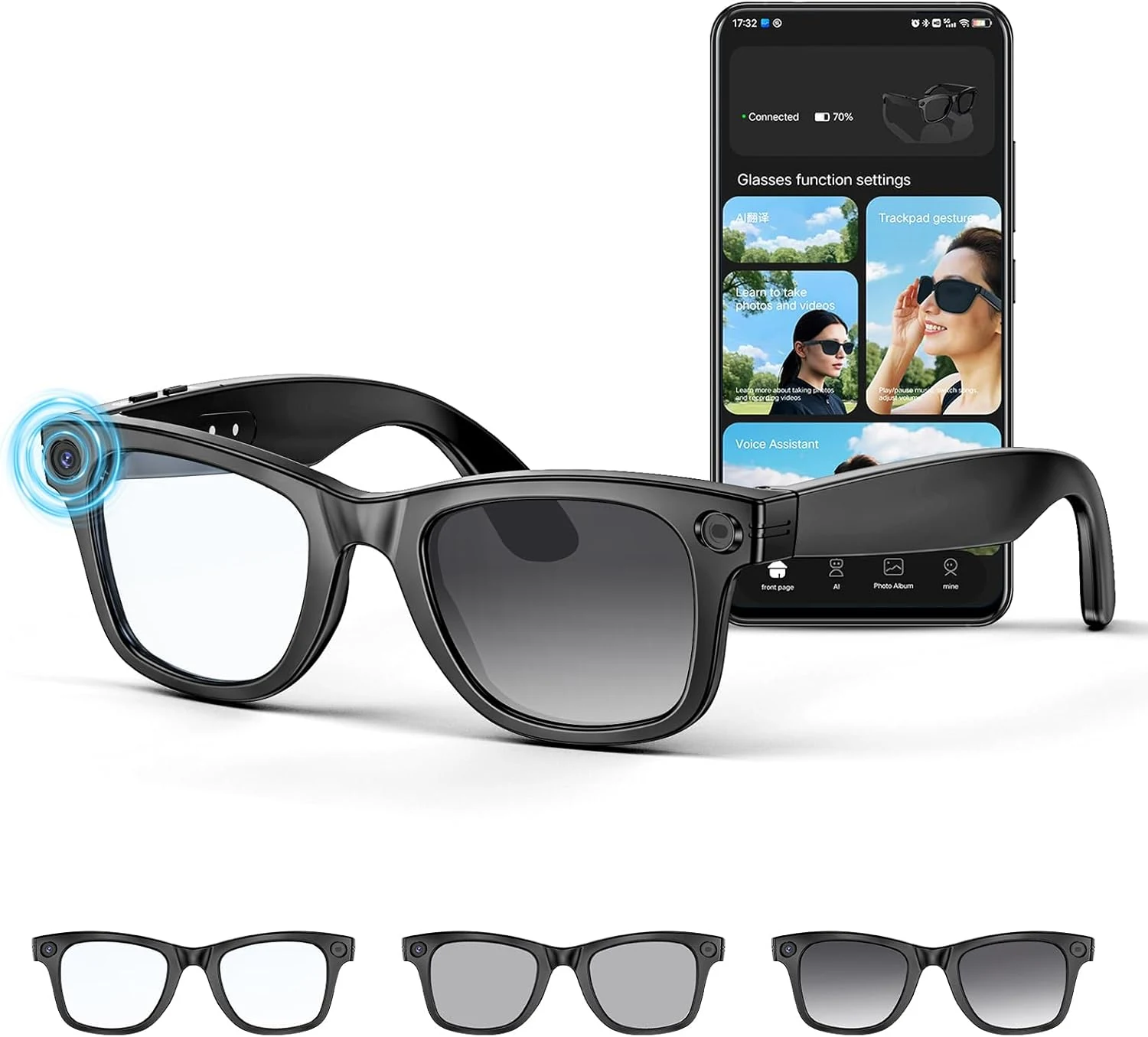
Mingtawn AI Smart Glasses 4K HD Camera, BT Call, 800W
Mingtawn AI Smart Glasses combine a built-in HD camera (up to 1080P recording), photochromic UV400 lenses, and Bluetooth calling with real-time “identify objects” features. They’re especially appealing if you want lightweight, hands-free capture and quick info while traveling or commuting, with the main tradeoff that video capture is limited to short continuous sessions.
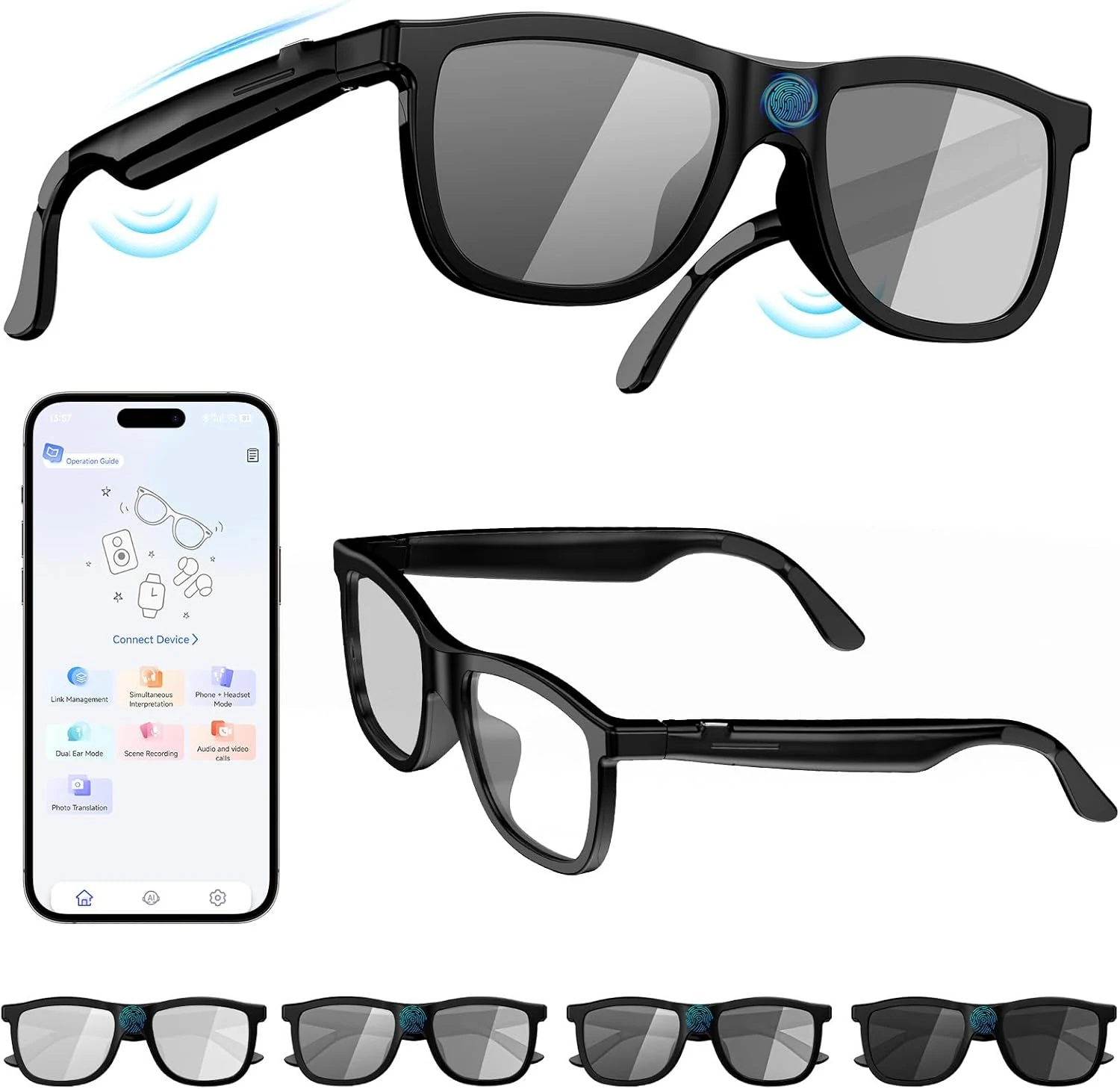
2026 Smart Audio Glasses with Electrochromic Lenses, Adjustable Tint Sunglasses
Osawalla’s 2026 smart audio glasses blend open-ear Bluetooth audio with electrochromic, manually adjustable tint lenses. They aim to be a practical driving and daily-use option, especially for people who want the convenience of changing shade levels without relying on UV or waiting for transition lenses to react.
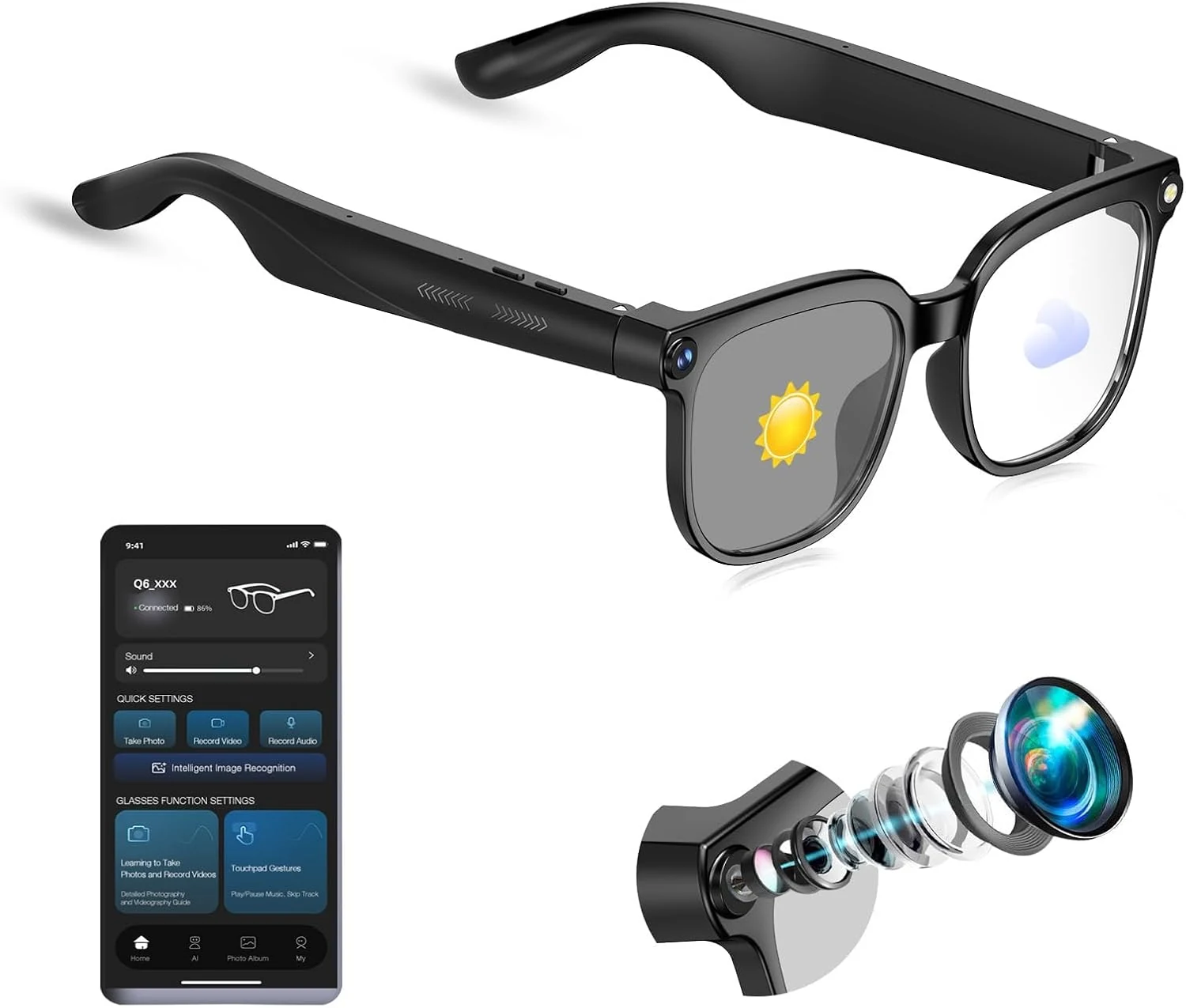
EGIKUYE Smart Glasses with Camera, 4K HD Video & Photo Capture
EGIKUYE smart sunglasses combine a built-in camera and microphone for hands-free 4K video and photos, plus Bluetooth calling/music, voice control, and AI ChatGPT-style assistance. They also include real-time translation for 110+ languages, making them a fit for travel, lectures, and day-to-day capture, but battery life for recording can be short and the frame runs large for some faces.
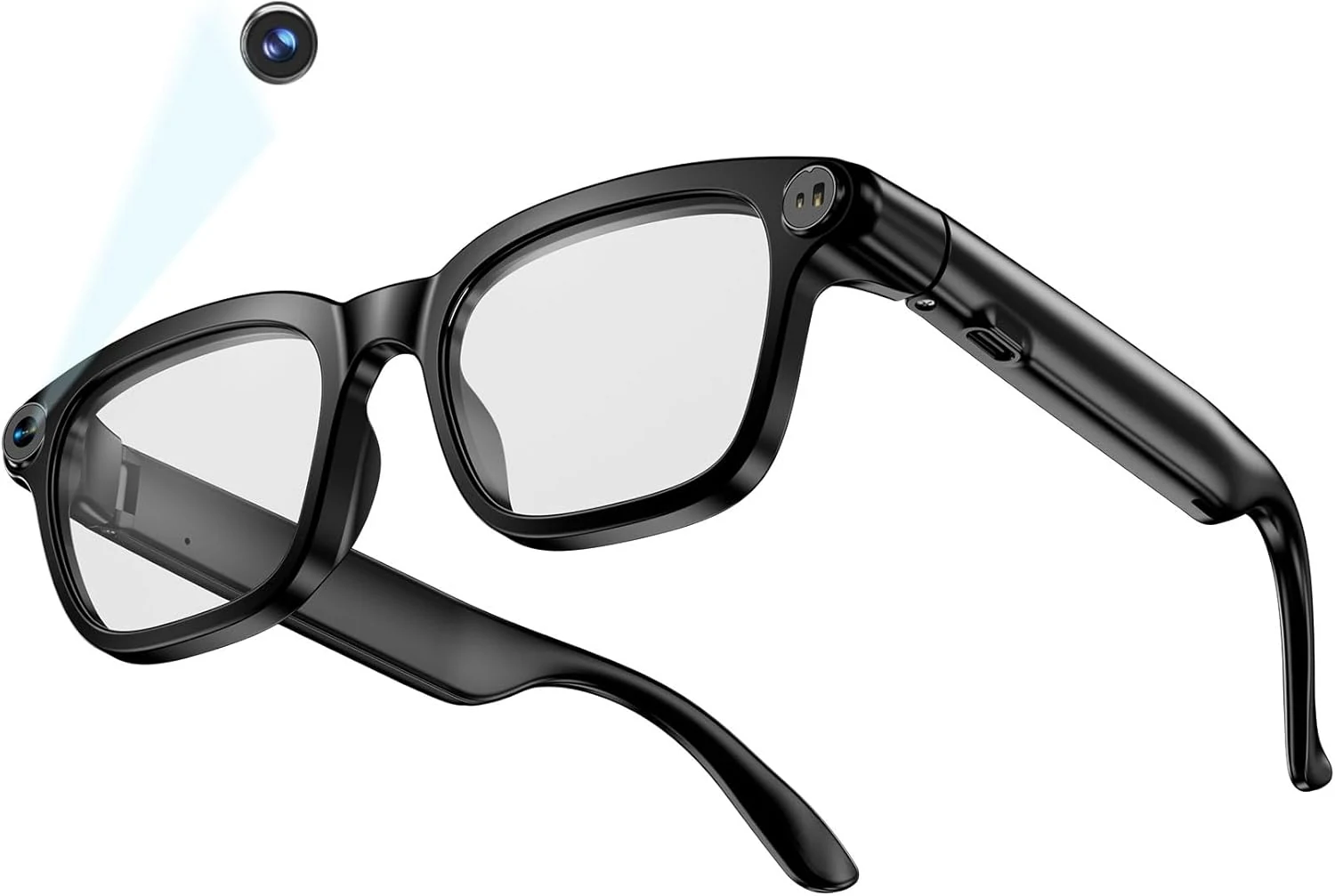
Fecoul AI Smart Camera Glasses (1080P POV Video + Translator)
Fecoul’s AI smart camera glasses combine 1080P POV video, AI object recognition, and a real-time voice translator, with open-ear Bluetooth audio for music and calls. They also use photochromic lenses for indoor-to-outdoor comfort, but battery life and real-world connection reliability can be limiting factors for some buyers.