Renpho Elis 1 Bluetooth Smart Scale
The Renpho Elis 1 makes most sense for someone who wants an organized history of weigh-ins without entering every result manually. Its main practical advantage is the record in the app, not the sheer number of body-composition figures. If you only want to read your weight and walk away, a simpler scale may cover the job with less setup.
Pros
- Weight is shown directly on the scale
- App stores historical measurements and supports multiple users
- Compatible integrations include Apple Health, Samsung Health and Fitbit
Cons
- Additional metrics depend on the app workflow
- Displayed increments do not establish measurement accuracy
- Body-composition functions need the manufacturer's safety precautions
Decide whether you want a number or a record
The scale displays body weight, while additional metrics and historical records live in Renpho Health. The app is the reason to choose the connected version: it gives repeated weigh-ins a place to go, rather than asking you to remember the previous result.
Consider whether that is a routine you will maintain. If phone pairing or app setup feels like extra work for a task you want to keep simple, a basic digital scale may be the more comfortable purchase. More features do not make the underlying habit easier for every household.
Read the capacity and increments correctly
This model specifies a maximum capacity of 400lb, or 180kg, and displayed increments of 0.2lb or 0.05kg. An increment describes how the result is shown; it is not a guarantee that the measurement is accurate to that amount. Avoid using the smallest printed number as a direct ranking of quality.
Set the scale up according to its instructions, on an appropriate stable surface, and handle the glass carefully. Renpho warns against impacts to the sides and corners. A convenient, consistent place to use it is a more useful starting point than repeatedly moving it between unsuitable surfaces.
Treat the extra metrics as a different feature
Renpho advertises thirteen metrics, including weight, BMI and body-fat information. They should not be treated as thirteen independent clinical measurements. Body-composition figures are reference information rather than a diagnosis, and a home scale should not be used to make treatment decisions.
Check the safety guidance for the exact model before using the body-composition function, particularly if you have an implanted medical device or are pregnant. Renpho publishes precautions for those situations. The useful shopping question is whether you need app-based tracking, not whether a longer menu of metrics can replace professional assessment.
Household profiles also need a data decision
Multiple-user support can make one scale useful for a household, but take time to understand how profiles and measurements are assigned. Agree who wants their records synced, and check the current app requirements on the phones that will actually be used.
Health-service integrations can save duplicate entry, but linking several services also distributes the records more widely. Review the permissions and choose only the connections you want. Before buying, consider whether the convenience of an automatic history is worth maintaining those accounts and settings.
The buying decision
Choose the Elis 1 for convenient weight logging when the Bluetooth and app routine suits you. Do not buy it solely for a long list of body-composition numbers. Check safety guidance, capacity and data-sharing settings, and choose a simpler scale if connected tracking adds little to your routine.
Product details and Amazon customer ratings as of .
Reference material
Available variants
Color
- Marble
- Scale and Tape Measure
- Black
- Grey-Black
- White
- Red Gradient
- Solar Power-Black
Size
- 11"/280mm
- 10.2"/260mm
- 12"/300mm
Recommended next
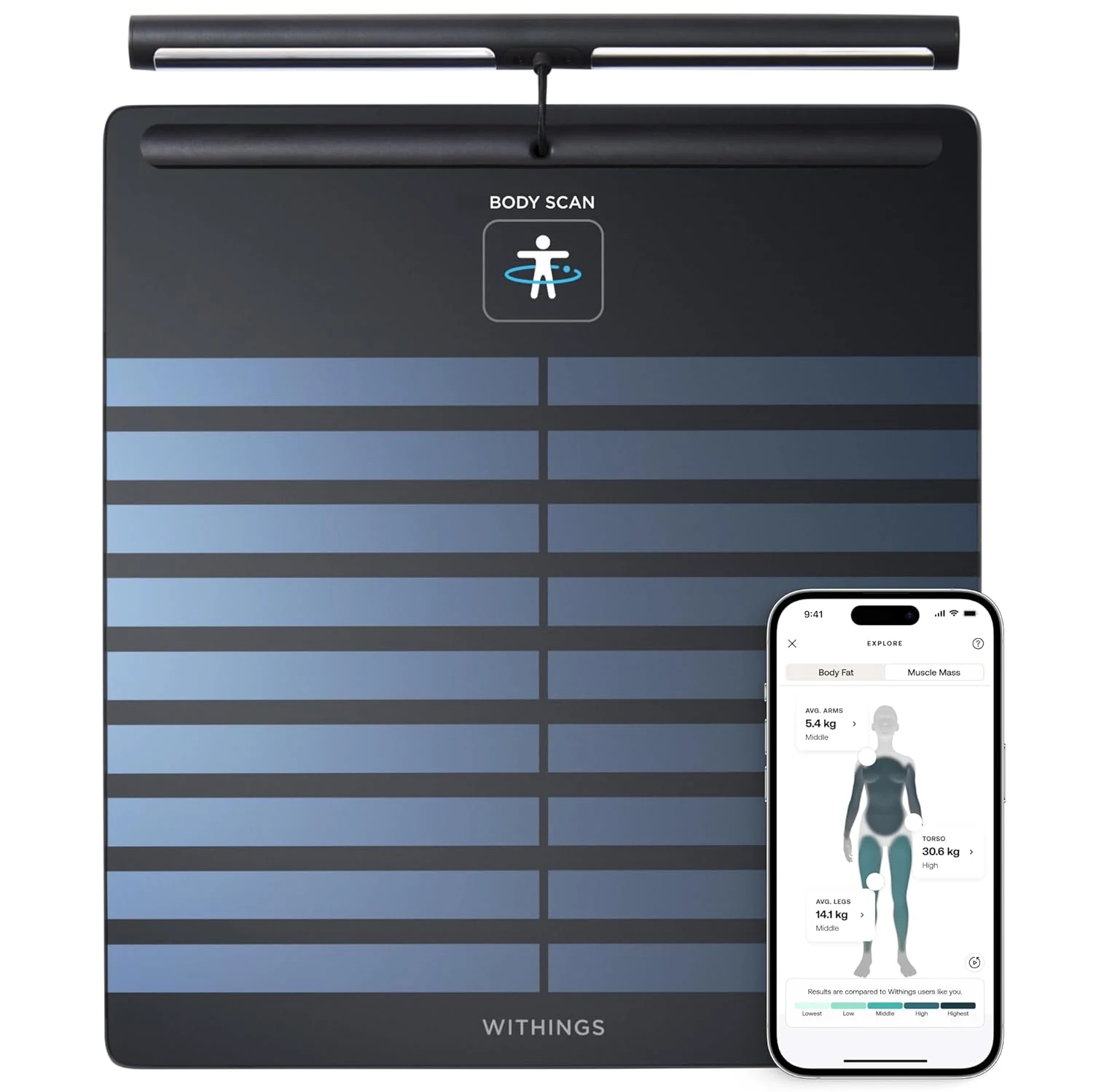
Withings Body Scan connected health scale
A premium smart scale for buyers who want more than weight tracking, but the advanced health features and setup experience may not suit everyone.
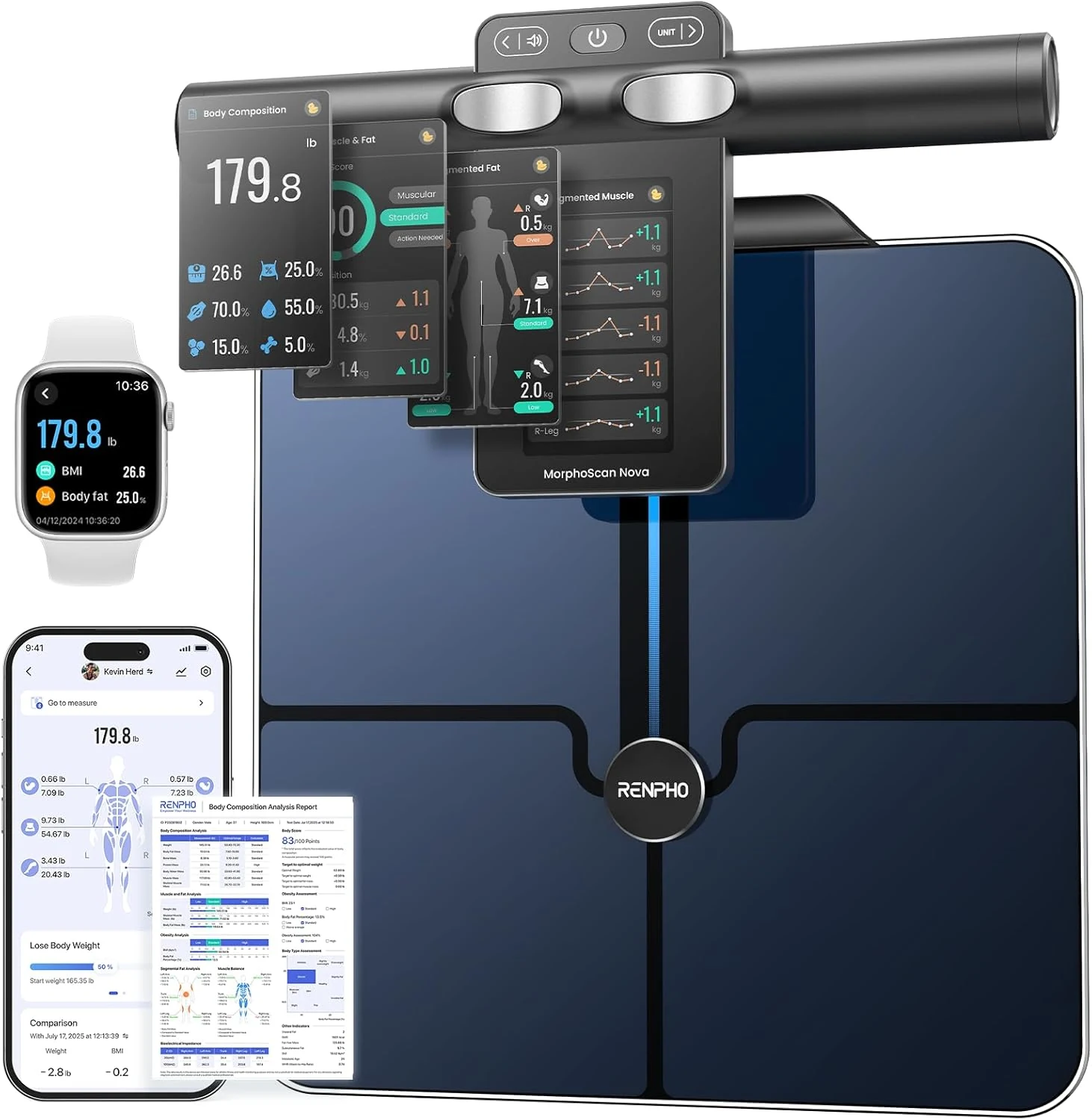
RENPHO MorphoScan Nova smart body scale
A feature-heavy smart scale for buyers who want app-based body-composition tracking and multi-user support; less appealing if you only need a simple weigh-in.