Kodak SCANZA Digital Film & Slide Scanner
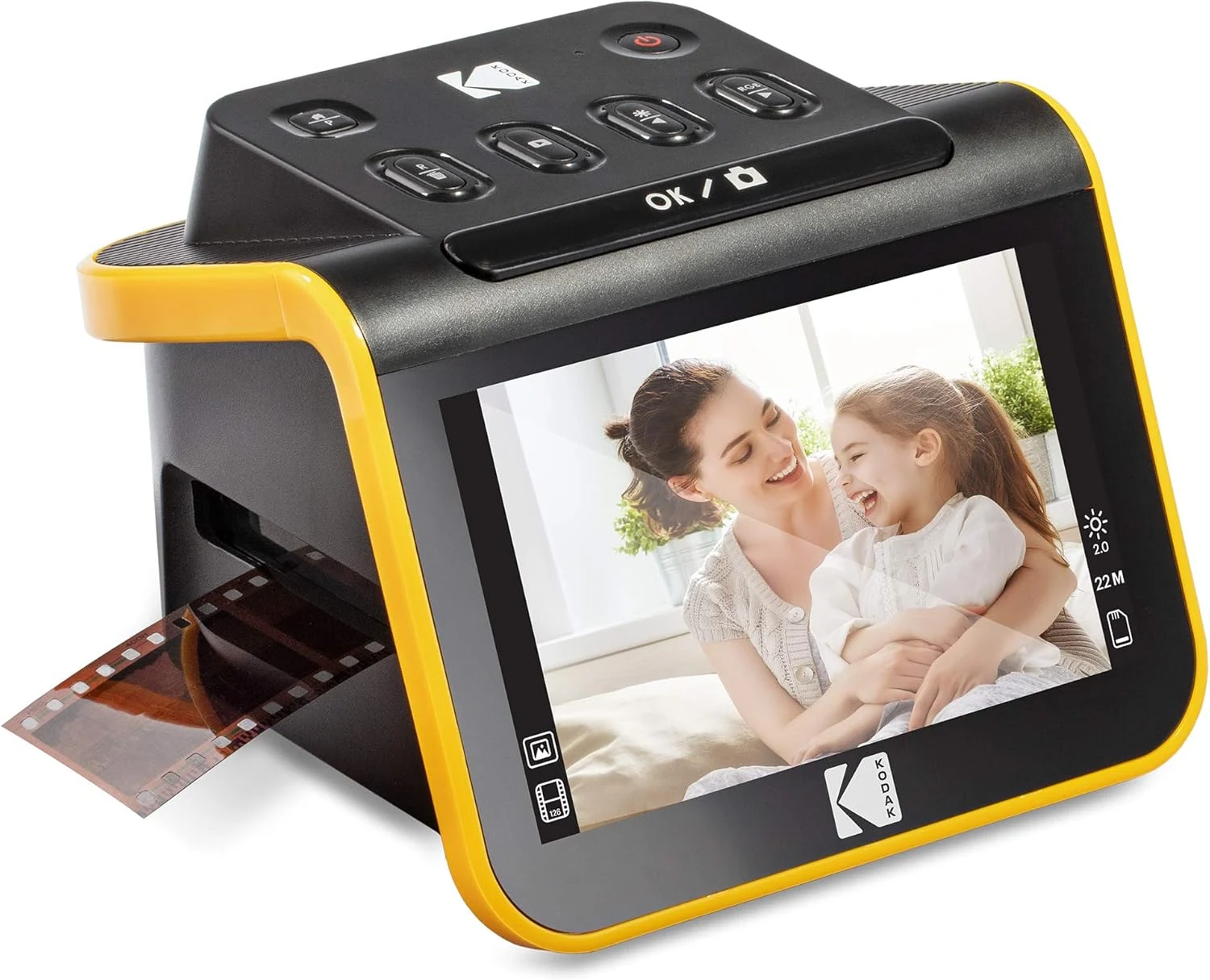
The Kodak SCANZA is a film digitizer for shoppers who want to turn developed slides and negatives into JPEGs without building a flatbed workflow. It emphasizes speed, built-in preview, and stand-alone use more than top-tier scan quality. That makes it a practical choice for casual archiving and sharing, but not for buyers who need the best possible image fidelity or broad film support.
Pros
- Supports the listed 35mm, 126, 110, Super 8, and 8mm formats.
- Stand-alone workflow with 3.5-inch LCD and one-touch capture is straightforward.
- Fast enough for large batches of old family slides and negatives.
- Includes inserts, adapters, cables, and a cleaning brush.
Cons
- Not a flatbed scanner; output is limited by the built-in capture method.
- 22MP is interpolation, so it is not the same as true native resolution.
- SD card is not included.
- Older or warped mounts can be awkward to load.
What this model is for
The SCANZA is best treated as a quick film-to-JPEG digitizer rather than a preservation-grade scanner. The product information says it captures developed negatives and slides and notes that it is not a flatbed scanner. For families or hobbyists who mainly want to see, sort, and share old images, that trade-off can be sensible. For large prints or demanding restoration work, it is not the strongest fit.
Supported formats and limits
The listed formats are 35mm, 126, 110, Super 8, and 8mm film, along with negatives and slides in those sizes. It is also stated that the unit will not convert film outside those formats and cannot develop raw film. Super 8 is described as converting to still images rather than video. Buyers with mixed archives should check that their film size and holder type match the included inserts before relying on it.
Image quality expectations
The specifications describes a 14MP sensor with an optional 22MP setting through interpolation. That means the higher figure should not be read as a true native-capture improvement. Final JPEGs may also need some post-processing, particularly if originals are faded, warped, or poorly exposed.
Ease of use and workflow
This model’s main appeal is convenience. The 3.5-inch LCD, tray system, and simple buttons are designed for quick scanning without separate software. The setup is self-contained, and the process is fast once you are comfortable with the inserts. The trade-off is that the loading process can be finicky with older or less-flat mounts, so it is better suited to orderly collections than to badly worn archives.
Storage and connectivity
The scanner saves to an SD card, which is not included, and it supports cards up to 128GB. USB and HDMI connections are included, but the safer interpretation is that these are for power, transfer, and display support rather than making it a general-purpose computer scanner. The minimum system requirement listed is Windows 7, so buyers using other systems should verify their intended workflow first.
How it compares with the listed alternative
That option may suit buyers who want a larger preview screen and do not need support for Super 8 and 8mm. The SCANZA makes more sense if those film formats matter more than screen size.
Who should buy it
Buy it if you have boxes of already-developed slides or negatives and want a compact, easy way to digitize them for family use. Skip it if you need a true archival scanner, expect top-end image quality, or have film formats outside the stated compatibility list. It is also a weaker choice for heavily damaged originals that need a more forgiving workflow.
The buying decision
The Kodak SCANZA is a practical, quick-use digitizer for developed film, especially when convenience matters more than absolute quality. If your archive fits the supported formats and you want simple batch scanning, it is reasonable. If image fidelity is the priority, look elsewhere.
Product details and Amazon customer ratings as of .
Recommended next
KODAK Slide N SCAN Film & Slide Scanner
A simple scanner for supported still-film formats, with a large LCD and SD-card workflow. Good for casual archiving; less suited to bulk work or broader film types.