Adesso USB Fingerprint Reader Windows Hello Compatible Built-in Biometric Security (AFP-100-TAA)
Quick take
The Adesso AFP-100-TAA is a plug-in USB fingerprint reader that brings fingerprint login to Windows devices that do not have an internal sensor. It is built around on-chip matching, AES-256 encryption, and Windows Hello compatibility, plus it can store up to 10 fingerprint profiles. The main catch is that buyer reports suggest fingerprint read consistency may be uneven, with some users seeing occasional login failures and fallback to PIN.
Pros and cons
Pros
- Designed for Windows Hello, so you can use fingerprint instead of passwords for Windows login.
- On-chip “match on chip” design with anti-spoofing, plus stated fast matching time (0.05 seconds).
- Stores up to 10 fingerprint profiles, which is useful for shared computers or multi-user offices.
- Built with AES-256 encryption for biometric data, and it is described as TAA compliant (made in Taiwan).
Cons
- Some buyers report fingerprint reads that are inconsistent, forcing repeated attempts or PIN fallback.
- The reader is a small USB device that sticks out when plugged in, which can feel less ideal for portability.
- Review evidence is limited in volume (a small number of reviews), so reliability patterns are harder to fully confirm.
What buyers think
Buyer-review evidence is limited, but a few themes show up clearly. Several buyers say it works with Windows Hello for enrollment and logins, and they describe the device as small and convenient. Some users also mention practical benefits beyond basic login, such as enrolling it for password manager use through Windows Hello. On the downside, reliability appears to vary for some people, with reports that the fingerprint sensor does not read consistently during authentication, even when Windows enrollment was straightforward.
What this USB fingerprint reader is for
If your Windows laptop or desktop lacks a built-in fingerprint scanner, the AFP-100-TAA is meant to fill that gap. It plugs in via USB and is positioned as a Windows Hello-compatible biometric access device, so you can enroll your fingerprint in Windows and use it to unlock the device and sign in where Windows Hello is supported.
It also targets shared or multi-user environments by supporting storage for up to 10 fingerprint profiles, which can reduce friction for household computers, small offices, and education settings where multiple people need secure access.
Key features that matter in daily use
Windows Hello compatibility
The biggest practical advantage is that it is intended to integrate with Windows Hello enrollment and authentication workflows. That means you typically do not need to manage a separate biometric app just to sign in, you enable it through Windows’ setup and then use the fingerprint prompt at login.
Matching and spoofing resistance
Performance claims include a 0.05 second matching time and anti-spoofing capabilities tied to its “match on chip” approach (the device performs matching rather than sending raw data off-device). The product is also described with false acceptance and false rejection metrics, which are relevant if you want to minimize unauthorized unlock attempts while still allowing successful enrollment and login for authorized users.
Encryption for stored biometric data
For buyers who care about security beyond convenience, it uses AES-256 encryption to protect sensitive biometric data. In straightforward terms, the product is built to keep biometric information protected while it is stored and used for authentication.
Multi-user profile support
If your use case is personal-only, this is less important, but it can be valuable in workplaces or shared desktops.
Security and compliance positioning
It is described as TAA compliant and made in Taiwan, which can matter for organizations with procurement requirements. It also mentions FIDO U2F certification for hardware-based two-factor authentication use cases.
Setup experience: what to expect
Buyers generally describe setup as manageable through Windows Hello, with enrollment enabled without complicated driver workflows for at least some systems. However, authentication reliability seems to be the part that varies most. If you find that enrollment works but login is inconsistent, it is worth paying attention to how you place your finger during prompts, since fingerprint matching can be sensitive to alignment and skin conditions.
Pros and cons recap
- Choose it if: you want a USB fingerprint reader to add Windows Hello logins, you need multi-user support (up to 10 profiles), and security features like AES-256 encryption and anti-spoofing are important to your decision.
- Consider alternatives if: you cannot tolerate occasional authentication failures, or you specifically need something with very consistent daily fingerprint recognition for all users.
- Buyer evidence suggests: Windows enrollment and basic functionality work well for many buyers, but fingerprint read consistency is not uniformly reported.
Is it worth it for your situation?
The AFP-100-TAA is most likely a good match if you are upgrading a Windows PC that lacks fingerprint hardware and you want a simple path to fingerprint login through Windows Hello. It also makes sense for households or small teams where multiple people need their own profiles. If your primary concern is “no friction” authentication every time, consider that some buyers report intermittent fingerprint reads that lead to repeated tries or PIN fallback.
If you want to move forward, the practical next step is to check the latest pricing and availability and confirm that your Windows setup supports Windows Hello on the device you plan to use.
FAQs
Does the adesso AFP-100-TAA work with windows hello?
It is designed to be compatible with Windows Hello, so you can typically enroll fingerprints through Windows and use the fingerprint prompt for login on supported devices.
How many fingerprint profiles can it store?
The device supports storing up to 10 fingerprint profiles, which can be useful for multi-user computers.
Is it good for password manager sign-in, not just Windows login?
Some buyers report using it with Windows Hello-based workflows for password manager integration, such as Chrome extension access that leverages the Windows Hello enrollment.
Why might fingerprint login fail even if enrollment succeeded?
Review evidence suggests fingerprint authentication reliability can be inconsistent for some users. This can be influenced by how the finger is positioned during the login prompt, and conditions like dryness or wear can affect recognition. If failures continue, PIN fallback is commonly used by Windows.
Is this reader suitable for shared computers?
Yes, the multi-user profile support (up to 10 fingerprints) makes it a practical choice for shared desktops or offices where each user needs their own biometric login.
Is the security encryption built in, or does it rely on software?
The device is described as using AES-256 encryption to protect biometric data and a “match on chip” approach, which means matching and anti-spoofing features are part of the hardware design rather than a purely software-based experience.
Specifications
| Product Title | Adesso USB Fingerprint Reader Windows Hello Compatible Built-in Biometric Security AES256 Encryption Made in Taiwan TAA Compliant AFP-100-TAA |
|---|---|
| Category | Electronics > Security & Surveillance > Biometrics |
| Manufacturer | Adesso |
| Item Weight | 0.317 ounces |
| Package Dimensions | 5.75 x 4.49 x 0.63 inches |
| Item model number | AFP-100-TAA |
Recommended next
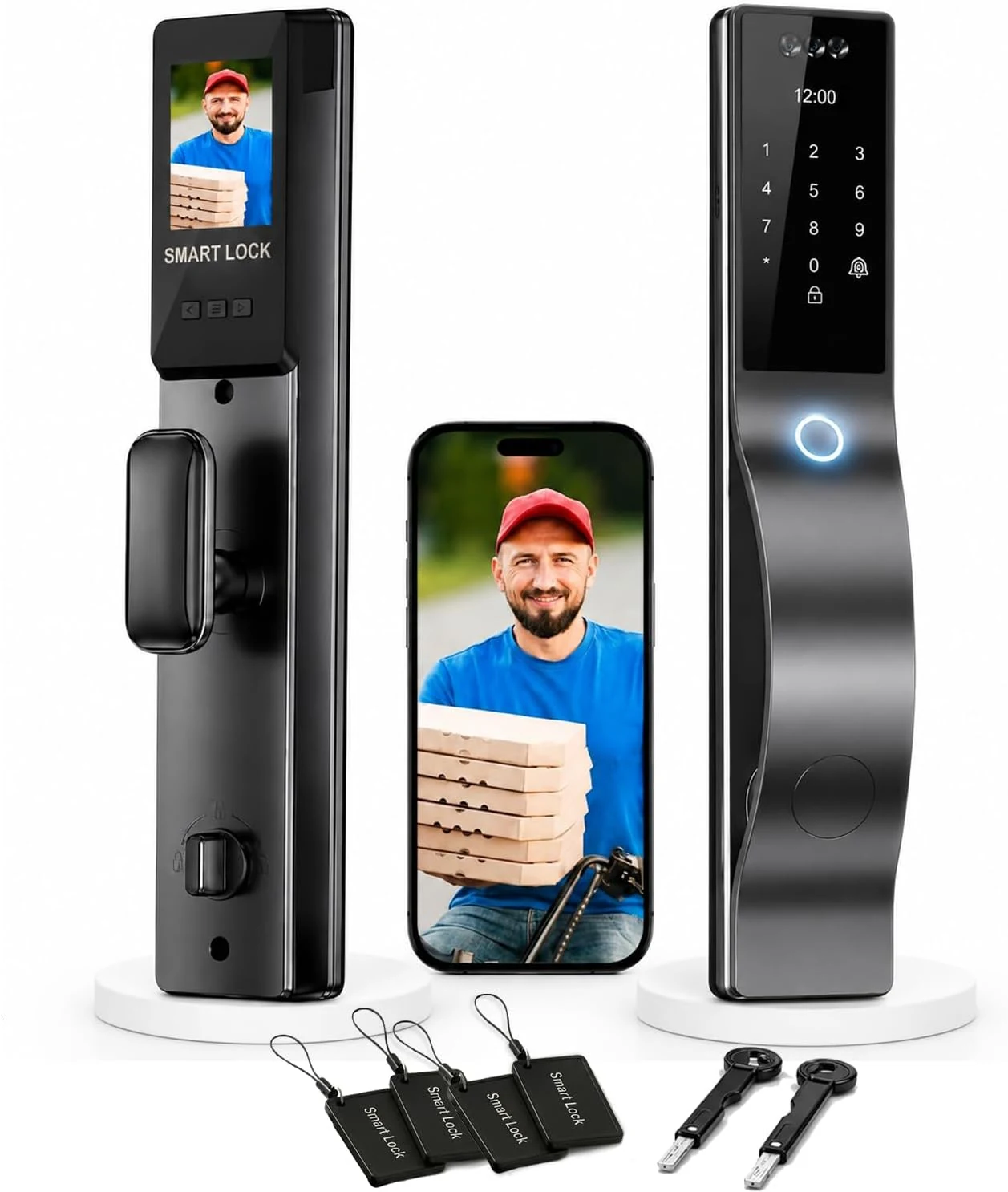
Smart Door Lock with Camera: 3D Face Recognition, Keyless Door
This smart deadbolt-style door lock blends 3D face recognition, fingerprint access, passcode (with anti-peep protection), IC cards, and a mechanical key, plus a built-in HD camera and two-way audio intercom. It is a strong fit for households and anyone who wants multiple entry options and remote visibility, with the main tradeoff being that battery performance and app connectivity depend on setup and usage habits.
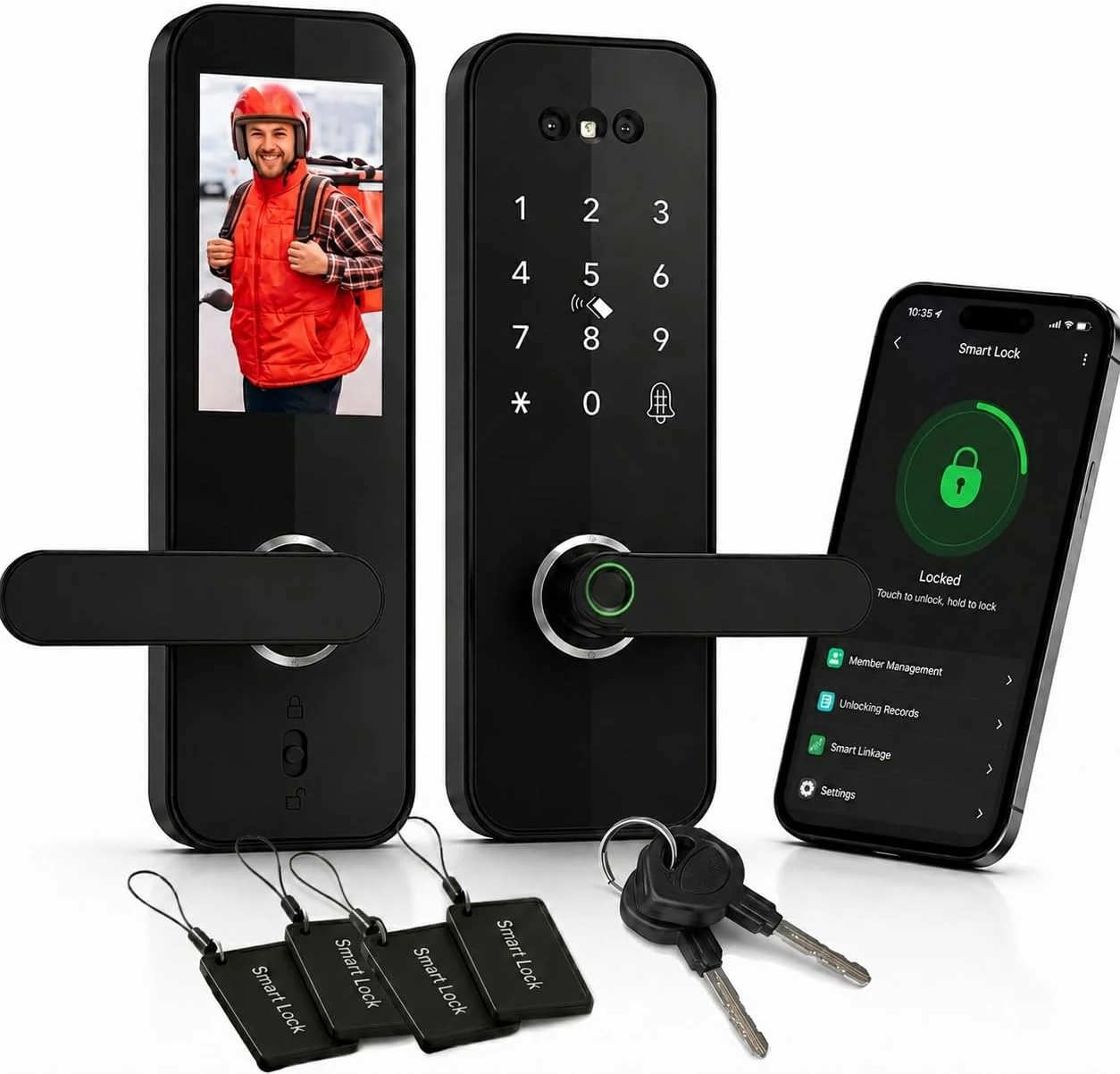
3D Face Recognition Smart Door Lock with HD Camera: Keyless Entry, Fingerprint, Passcode, IC Card, Key, Tuya App, Doorbell, Auto-Lock Deadbolt for Front Door
This 3D face recognition smart door lock combines hands-free entry with fingerprint, passcode, RFID IC cards, and a mechanical key, plus a built-in 1080p HD camera and doorbell. It supports Tuya app remote access, auto-lock, and an anti-theft alarm, with DIY installation designed for standard mortise deadbolts (45–90mm thick doors). The main buying caveat is compatibility and setup expectations, plus limited review evidence for real-world reliability.
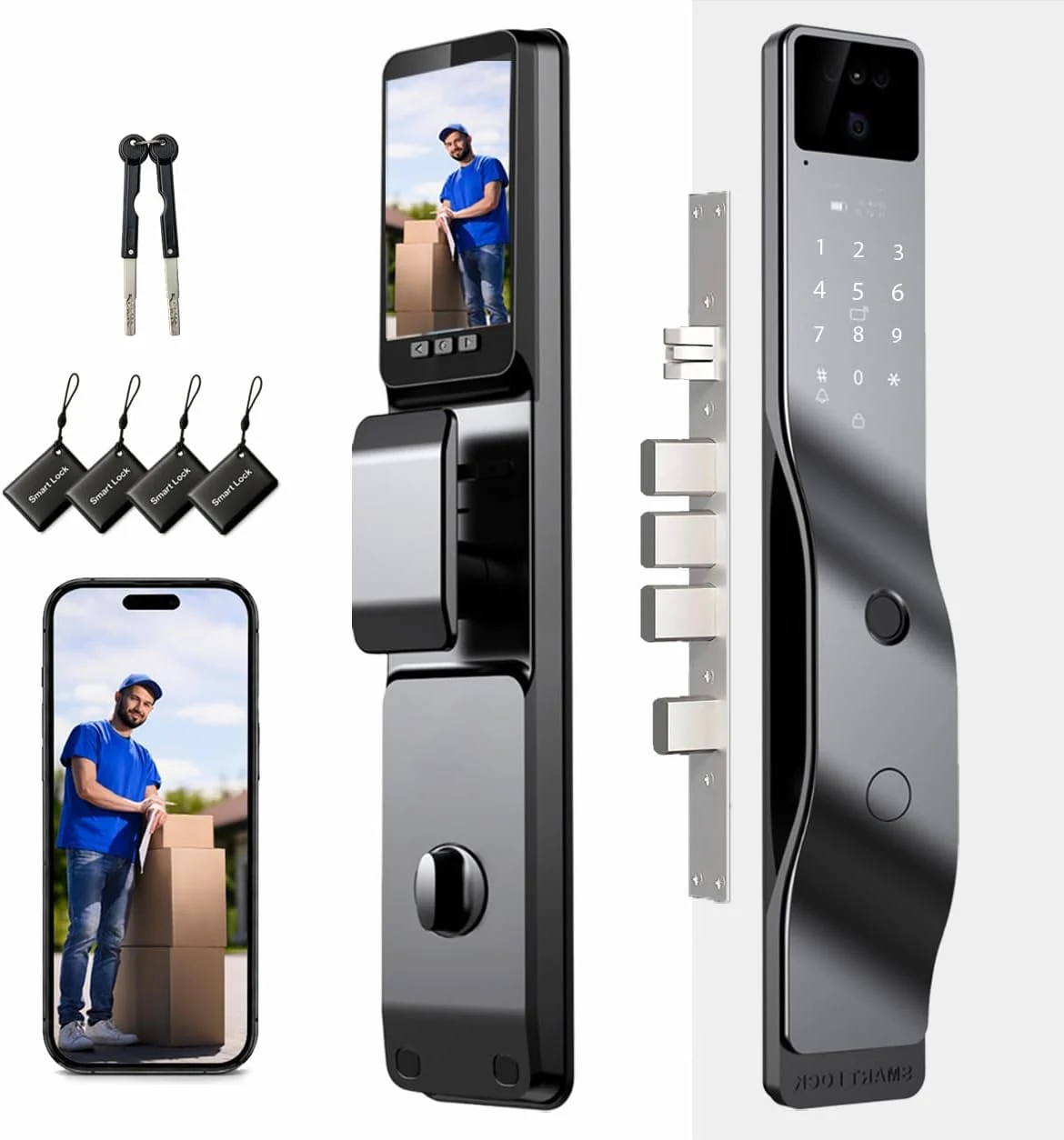
3D Face Recognition Smart Door Lock with 1080p Camera – Keyless Entry Deadbolt with Palm Vein, Fingerprint, Video Intercom, Alexa compatible & Tuya App Control
A feature-rich biometric smart deadbolt that combines 3D face recognition, palm vein scanning, fingerprint, passcode, IC cards, and emergency key access, plus a 1080p video intercom camera with two-way audio. Best for buyers who want multiple unlock options and remote monitoring via the Tuya app, but app reliability and long-term performance support are worth validating before relying on it day-to-day.
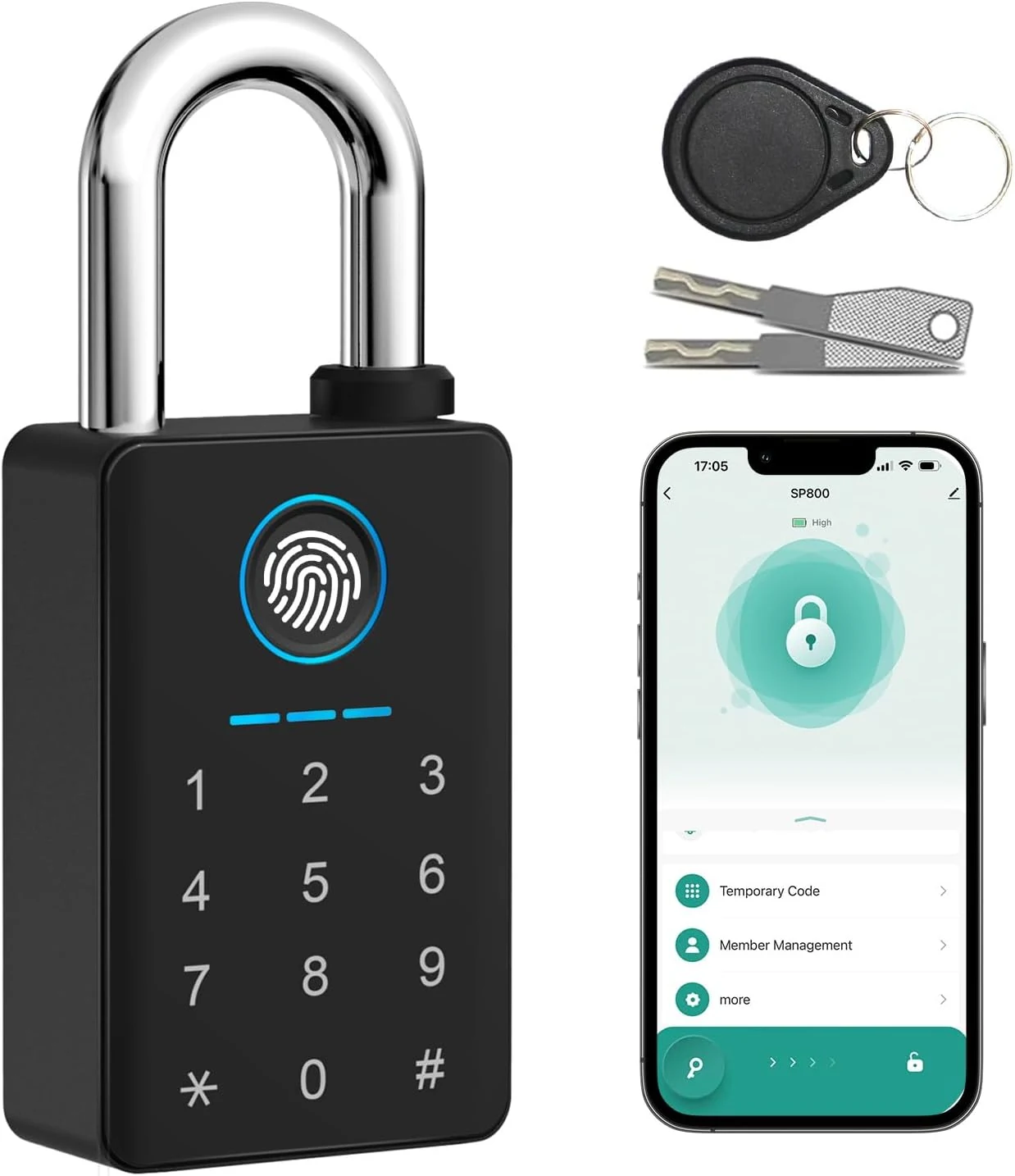
Aurosmart heavy duty fingerprint padlock with key, smart gate lock with keypad, keyless entry digital combination lock (Tuya app)
The Aurosmart fingerprint padlock is built for outdoor gate, shed, and storage use, combining fast fingerprint unlock with keypad, RFID/NFC-style access, Tuya app control, and a hardened steel shackle. It offers sizeable user storage and long battery life, but buyers should note sensitivity around the keypad area and that weather performance varies based on use conditions.